Home / Information / Zvjezdana Blažić: By Acquiring Studenac, Radenska Becomes a Serious Competitor to Jamnica in the Mineral and Spring Water Segment

Zvjezdana Blažić: By Acquiring Studenac, Radenska Becomes a Serious Competitor to Jamnica in the Mineral and Spring Water Segment

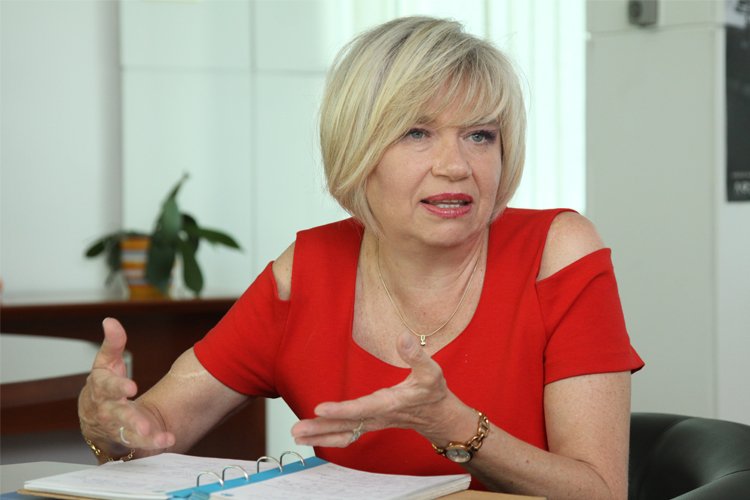
A significant reshuffling is taking place in the domestic beverage industry, as evidenced by today’s announcement that Radenska will acquire 100% of the business share in Studenac by the end of the year. In recent months the Slovak Kofola, which also owns Radenska, has taken over Badel’s non-alcoholic beverages. Earlier this month, it also came to light that the Meteor group has secured, or purchased, 67.5% of the claims of Badel 1862’s creditors in recent months, making the fate of that company quite certain. The developments in the beverage production sector were analyzed by Zvjezdana Blažić, one of Croatia’s leading experts in the food industry.

– After acquiring Podravka’s beverage division, Radenska will be a serious competitor to the undisputed market leaders Jamnica and Jana in the mineral and spring water segment. There will evidently be an increase in operational efficiency through economies of scale and additional market potential. On the other hand, Podravka has been achieving poor financial results in the beverage segment due to insufficient revenues and high operational costs, and has now achieved another of the goals of its internal restructuring program, focusing its business on brands with higher profitability and directed towards the internationalization strategy that this company often emphasizes, commented Blažić on the sale of Studenac to Radenska.

– The announcement of the return of Badel’s non-alcoholic beverage production to Lipik from the bottling plant in Slovenia is excellent news for the growth of production in this industry, said Blažić, who once served as the assistant minister of agriculture for agriculture and the food industry, reminding us of the trends in beverage production that have led to the current situation in that industrial branch.

Blažić notes that beverage production in Croatia experienced negative trends in 2013 and 2014. In 2015 and the first half of 2016, there was a significant recovery. Thus, the market grew by over 3% in 2015 and over 5% in 2016. Despite such growth rates, beverage production in Croatia has not yet reached the pre-crisis production levels of 2008 and is nearly 10% lower.

– Given that the market has been declining or stagnating in recent years, most beverage producers are facing financial problems, but there is also a gradual consolidation of the market, which is an inevitable process. Of course, prior to this, there was already a strong consolidation of retailers that negatively affected producer margins. Despite this, a large number of non-alcoholic beverage producers have operated in the Croatian market, and in recent years, an inevitable consolidation has been present. It is evident that Radenska, owned by Slovak Kofola, is taking on the role of a sort of regional consolidator, having recently acquired Badel’s non-alcoholic brands Naru, INka, and Voćko, but let us not forget the exclusive bottling agreement with Pepsi Co for the Croatian and Slovenian markets.

– I must mention that Atlantic Group, after acquiring Droga Kolinska, also organized part of its non-alcoholic beverage production from Slovenia in the factory in Apatovac, previously acquired from Badel 1862. Thus, ownership reshuffling can contribute to strengthening industrial production and employment, regardless of who the new owner is. Therefore, such strategic business combinations in terms of acquisitions or mergers should only be viewed in light of the quality of the strategic partners involved in that process, concluded Zvjezdana Blažić.