Good day! You have waste from raw leather that you are throwing away; we would like to buy that waste – offered a representative of a Chinese company to the director of a leather company in neighboring Bosnia and Herzegovina. The director of the Bosnian company was quite surprised by such an offer as he has to pay for the disposal of waste at a prepared landfill. For this reason, the Bosnian director told the Chinese man that he would give him all the waste, just to get rid of it. In other words, ‘come with a truck and take it away,’ as the Bosnian might have said to the Chinese. However, the Chinese insisted that his company pay the Bosnian for the disposal of leather waste because it is a raw material for them. Thus, they agreed and signed a business cooperation contract.
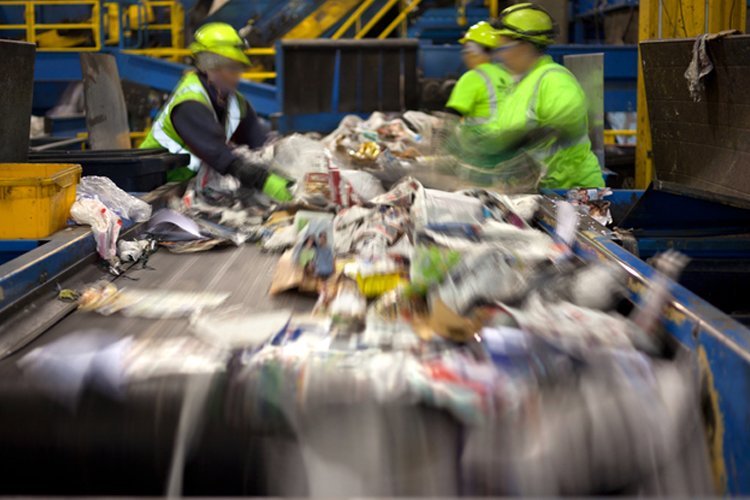
Potential Investments The example of a Bosnian who does not know what to do with waste could be mirrored in many Croatians. Croatia disposes of about two billion tons of waste per year, which is about 90 percent of the total waste generated in Croatia. This means that only about ten percent, believed to be even less, is recycled, which is indeed a huge percentage of wasted raw materials. For illustration, the average in the EU is 37 percent of waste disposed of, and if we look at the most developed countries (and, if we want, countries with much higher ecological awareness and culture) such as Belgium, the Netherlands, and Germany, we see that only one percent of waste is disposed of there, which is currently science fiction for us. Sweden and Slovenia, on the other hand, are much worse (but still much better than Croatia), where 30 percent of waste is thrown away. According to some estimates, in the last ten years, more than 500 million kuna worth of raw materials have been buried in Croatia each year, with that value increasing year by year. If processed, their value would be even higher, but perhaps a more illustrative figure is the one from the EU, which shows that in that community, waste management accounts for 1.1 percent of GDP. In numerical terms, this amounts to about 140 billion euros, which is indeed an impressive figure. If waste management in Croatia accounted for one percent of GDP, that business would be worth half a billion euros. Perhaps even more, as Mladen Jozinović, head of the HGK Group of Waste Management Centers, claims that potential investments in large centers for mechanical-biological waste treatment amount to at least 300 million euros. Entrepreneurs engaged in waste management also face obstacles that must be removed for the waste business to function properly. For example, the problem for Stražaplastika and similar companies is that they must import recyclables if they want to use them in production along with the base material, depending on the type of product. – Most municipal companies in Croatia have not yet established a quality system for separate collection and sorting of waste, which is a necessary prerequisite for them to offer quality secondary raw materials to the market – they state from HGK.
Key Cooperation By January 1, 2020, Croatia will have to ensure through relevant authorities the preparation for recycling and reuse of waste materials: paper, metal, plastic, and glass from households. This is stated in the Waste Management Plan of the Republic of Croatia for 2015 to 2021. If possible, it adds, raw materials from other sources should also be ensured if those waste streams are similar to household waste, and that in a minimum share of 50 percent of the waste mass. It should be noted that there are also opportunities in the collection of e-waste, bio-waste, textiles, ships, construction waste, and similar. Furthermore, as stated in the Plan prepared by the Ministry of Environmental Protection and Nature, preparation for reuse, recycling, and other forms of material recovery must be ensured, including landfill and filling procedures in which waste is used as a substitute for other materials; this refers to non-hazardous construction waste. This obligation excludes soil and stones that are not contaminated with hazardous substances. The question is whether Croatia, which has amended regulations in line with the European Union, can achieve the goal that by 2020, households separate at least 50 percent of municipal waste that could be used as raw material for the production of other products. – Croatia can separately collect 50 percent of paper, glass, plastic, and metal by 2020, but it should be added that this goal is very ambitious. Key to achieving it would be cooperation between the central state and local authorities and intensive education of the population. If we fail in this, Croatia will pay fines until it meets the agreed targets – they state from HGK.