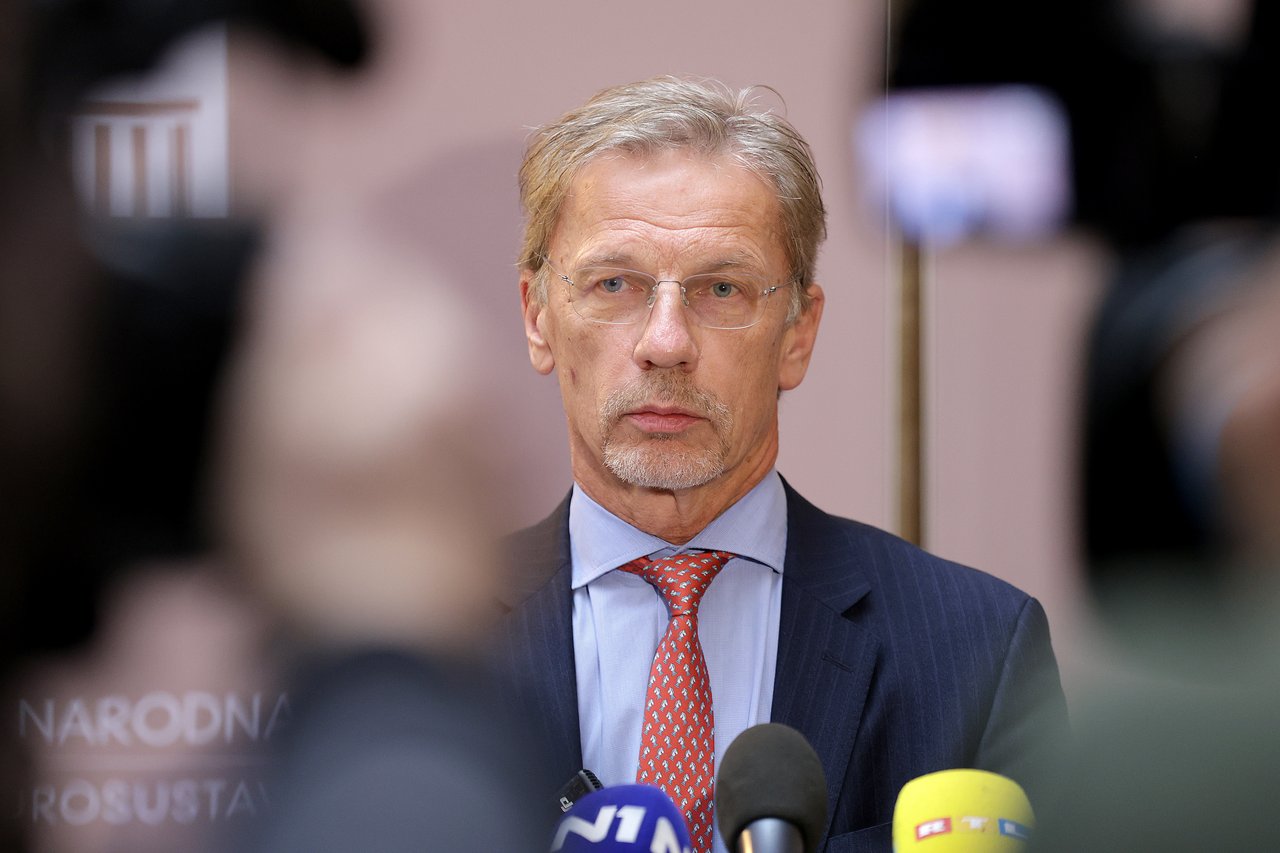
Minister of Economy Tomislav Panenić signed on Friday with colleagues from Albania, Montenegro, and Bosnia and Herzegovina, as well as representatives of the SOCAR company from Azerbaijan, a Memorandum of Understanding for the Adriatic-Ionian Pipeline (IAP) project. The memorandum was signed as part of the foreign policy meeting Dubrovnik Forum. After the signing, Panenić stated that the construction of the IAP will ensure gas supply for Southeast Europe.
– We have established our joint initiative for the development of the Adriatic-Ionian Pipeline as a route that ensures gas supply and security in these markets. We hope that this continuation of cooperation will make this future route a significant link between the north and south and that it is the path towards full liberalization of the gas market in Europe, said Panenić.
He asserted that it is in everyone’s interest that gas from the IAP is not only for the markets in the region but also for the rest of Southeast Europe.
– We hope that we will then have a low cost of gas transportation and greater access to gas, said the minister.
Montenegrin Minister of Economy Vladimir Kavarić emphasized that the signatory countries of the agreement are partners, not competitors.
– The basic agreements were reached long ago; we must concentrate on very practical solutions. We are not competitors to each other; we are partners in the realization of a very significant project, he said.
In response to a journalist’s question, the Minister of Foreign Trade and Economic Relations of Bosnia and Herzegovina, Mirko Šarović, said that their basic requirement is for the IAP to go through the territory of Bosnia and Herzegovina, but he could not answer whether the pipeline would go through the Neum Corridor or not.
– Bosnia and Herzegovina supports this regional project and approach. We ask our partners for a part of the transit route to pass through Bosnia and Herzegovina. This is our basic requirement in the documentation we presented at this panel. We hope that the route will pass through the Neum Corridor, said Šarović.
The Deputy Minister of Energy and Industry of Albania, Ilir Bejtja, says that the Dubrovnik Forum once again emphasized the importance of gas supply security.
– This project will stabilize supply because we will have diversification of sources, said Bejtja.
The IAP project involves a pipeline that would connect the gas system of Croatia, specifically Lika and Dalmatia, with the continuation of construction from Split to Ploče and further through Montenegro, connecting in Albania to the Trans Adriatic Pipeline (TAP) project. TAP is planned to transport gas from the Shah Deniz II field in Azerbaijan through Greece, Albania, and the Adriatic Sea to Italy, with a length of about 870 kilometers. The intention is for the IAP and TAP projects to be developed and constructed simultaneously. The total planned length of the IAP pipeline from Split to the Albanian Ferry is 516 kilometers, with a capacity of five billion cubic meters per year. The pipeline will enable the supply of natural gas to the involved countries, transporting excess to other European countries.
The Croatian part of the IAP, from Dugopolje to the border with Montenegro, is 250 kilometers long, and the estimated investment value is around 265 million euros.
Otherwise, the Dubrovnik Forum on the topic of stronger connections among European Union member states in the Adriatic, Baltic, and Black Sea regions concluded on Friday afternoon, and according to participant Božo Petrov, it would be excellent if the ideas presented at that meeting were realized.