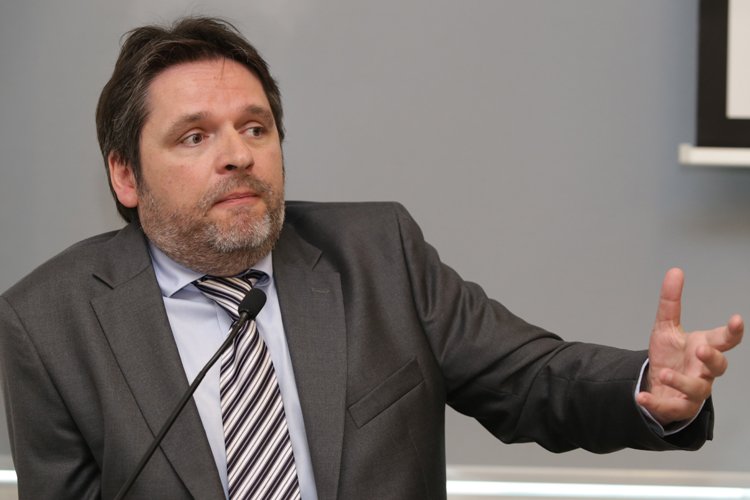
The announcement of “Proposal for a Three-Year Budget Projection“, published on Tuesday by the Pametno party, has attracted the attention of the wider Croatian public. The portal lider.media sought the opinion of economic expert Željko Lovrinčević for a comment on the first such projection in Croatian history, who stated that the “budget projection is a PR message for the public”. Furthermore, Lovrinčević emphasized that the projection of the state budget is a serious task that cannot be completed in a short time (especially a three-year projection) and that parties no longer fully decide on the budget as its revenue and expenditure sides are under pressure from the European Union.
– Impact simulations are needed, and a larger number of people should continuously engage in this, while smaller parties do not have enough people or sufficiently professionalized structures for this, Lovrinčević stated.
Shortly after the publication of the text with Željko Lovrinčević’s comment on the portal lider.media, our readers posted several comments, including one from economic analyst Velimir Šonje. Although he agrees with his colleague that “projections are a serious task that requires time and capacity”, he claims that Lovrinčević has “switched the theses”.
– The availability of data, which should be public, cannot be interpreted as a barrier to entering the political market. Moreover, large parties do not have their resources for these tasks. They have so many that until now no one has been able to do this, Šonje wrote in the comments.
Here we convey the comment of Velimir Šonje.
– I completely agree that projections are a serious task that requires time and capacity, but Željko has switched the theses here. The availability of data, which should be public, cannot be interpreted as a barrier to entering the political market. Moreover, large parties do not have their resources for these tasks. They have so many that until now no one has been able to do this. Large parties use state resources (when in power) and then create party advantages based on that, which is questionable. The state should provide everyone with equal access to data and some analytical resources, for example, in institutes funded by taxpayer money. I rarely disagree with Željko, but this time we think differently. I stand by my proposal from November last year that parties should announce before the elections what their policies mean for the budget, deficit, and debt, even if it is in five lines of bullet points. And I am glad that Pametno is on the trail of that proposal. It is in the public interest that state resources are used in a way that improves and facilitates this work in the future, rather than state resources serving as a barrier that preserves a rent position in the political market for a small number of parties, Šonje wrote.