
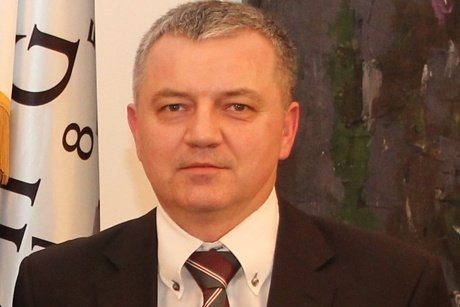
– The business philosophy of the Croatian Bank for Reconstruction and Development (HBOR) must change. In the future, its commercial role should be emphasized less, while its developmental role should be emphasized much more – stated Darko Horvat, Minister of Entrepreneurship and Crafts, during his presentation at the EU-supported Microcrediting Conference organized by HBOR today in Zagreb.
Horvat also added that much more is expected from the Croatian Postal Bank in the future, and that it, together with HBOR, must start taking on more risks, which, according to Horvat, should result in the satisfaction of Croatian entrepreneurs. He claims that these two institutions, being in state hands, should be a mechanism through which the state helps entrepreneurs.
– HBOR can become a very effective service to support all entrepreneurs – he believes.
He also pointed out that the previous subsidy system has not yielded results, and he presented the data that the state spent 36 million kuna last year just on subsidizing interest rates for entrepreneurs, to which should be added the funds that municipalities, cities, and counties have spent for this purpose.
– We want a cheap source of financing for micro-entrepreneurs, which is why we set the upper limit of the interest rate, at their suggestion, at 3 percent – concludes the Minister of Entrepreneurship and Crafts.
– Micro-entrepreneurs need institutional assistance as they generate only 11 percent of the total revenue of the Croatian economy while simultaneously making up 90 percent of all economic entities and employing almost 25 percent of all workers in the Croatian economy – stated Dušan Tomašević, CEO of HBOR.
The HBOR program ‘Microcrediting with EU support’ was also presented, which is implemented in cooperation with commercial banks and is intended for micro-entrepreneurs, individuals, and legal entities that employ up to 10 employees and generate an annual business income of up to 2 million euros.


