Home / Business and Politics / Reform must be implemented in the next year and a half, with the goal of economic growth and employment

Reform must be implemented in the next year and a half, with the goal of economic growth and employment

The government has adopted the National Reform Program. This will not only be a reform of the pension, health, and social systems. The document has four main areas

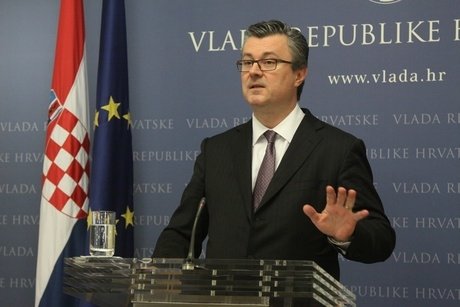
– We have a lot of work ahead of us, said Prime Minister Tihomir Orešković, the reform will be complex, it will not be easy to implement, but it is necessary. It represents all the measures that the government plans to implement in the period of 12 to 18 months, and their goal is economic growth and the opening of new jobs.

This will not only be a reform of the pension, health, and social systems, said the Prime Minister.

The document has four main areas. The first is macroeconomic stability and fiscal sustainability, with the aim of reducing public debt. Easier business conditions and a better investment climate is the second area.

– We are creating a positive climate among investors, we will remove bureaucracy from the public administration and strengthen IT systems to connect institutions.

Efficiency and transparency of the public sector is the third point, and the fourth is better education for new jobs, or the continuation of curricular reform.

The government has also adopted the proposal for the convergence program of the Republic of Croatia for the period 2016–2019. The goal of this document is fiscal consolidation, that is, reducing the budget deficit.

– All the stated goals and projected movements of fiscal policy are determined and depend on the implementation of key structural reforms. If stronger economic growth is initiated, public debt will fall well below 80 percent, to a level around the acceptable 76 percent, which is the main goal of this program, said Finance Minister Zdravko Marić.

The government has also made a decision to establish a Commission for the regulation of the system of non-tax levies and the reduction of non-tax levies. The goal of this commission is to determine the list of non-tax levies that will soon be abolished and which will be reduced. The Commission will be headed by Finance Minister Marić and ten other ministers who have until May 3 to present the Commission with a list of all levies that will be reduced or abolished. Some of these levies will be abolished or reduced by decrees, while others will be reduced by special laws, and a register of non-tax levies will also be maintained.

The government also established the Council for State Information Infrastructure at today’s session, which will be chaired by the Prime Minister himself with the aim of developing state information infrastructure and connecting all public bodies.