Home / Business and Politics / These are the reform measures in ten main reform areas that the Government will propose

These are the reform measures in ten main reform areas that the Government will propose

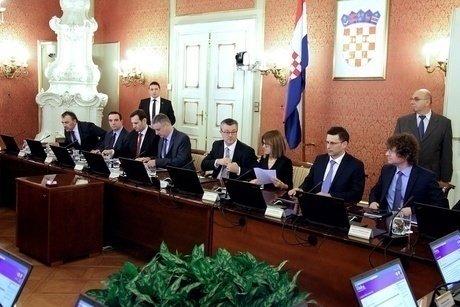
The National Reform Program for this year, which will be presented at the Government meeting on Thursday, brings a series of reform measures in ten main reform areas, all aimed at addressing the structural problems faced by Croatia in accordance with the recommendations of the Council of the European Union.

According to the known data that can be gleaned from the statements of individual ministers, as well as from the budget proposal for this year, the Government is expected to send a document to the European Commission by the end of April proposing ten main reforms.

These include the reform of the health and pension systems and public administration, curricular reform, more efficient management of public enterprises, reduction of non-strategic state assets, a fairer system for the allocation of social benefits, regulation of land registries, increased investment in research and development, and the removal of barriers to business.

In the health system, for example, changes are planned in the supplementary health insurance system to increase revenues through higher premiums, as already mentioned by Health Minister Dario Nakić. There is also a reform of the hospital system through the functional connection of hospitals, reform of emergency medicine, and rationalization of non-health services in hospitals, as well as reform of primary health care and organization of palliative care. The aim is to financially stabilize the health system and address the issue of overdue unpaid obligations, which currently amount to around 2.5 billion kuna.

In the pension system, the Government is expected to propose shortening the age for extending the retirement age from 65 to 67 years and equalizing the retirement age for men and women. The age for early retirement would also be raised from 60 to 62 years, and the number of professions that qualify for reduced working years would be halved. The Government aims to reduce the influx of new retirees and alleviate pressure on the state budget, and all these announcements have already provoked discontent among unions.

The announced reform of public administration should include a new salary system, a single collective agreement for state and public employees, a reduction in the number of agencies, strengthening the e-Citizens system, and the introduction of the e-Business system. The goal is to achieve greater fairness in salary policy, better efficiency of state and public employees, reduced expenditures, and ultimately improved quality of public services.

The reform program should also include a more efficient way of managing public enterprises, for example, through the selection of board members and supervisory boards of these companies via public tenders, as well as monitoring the operations of public enterprises, for which the State Office for State Property Management (DUUDI) would be responsible. One of the goals of these reform measures would be to make the owner’s, i.e., the state’s, policy towards the operations of these companies clearer and more aligned, while simultaneously reducing the potential risks of these companies’ operations for the budget.

In the part of state property that is not strategic, sales of, for example, apartments, business premises, land, and shares in companies not on the strategic list have been announced multiple times. This year alone, it is planned to generate at least 500 million euros in the budget, thereby also contributing to the reduction of public debt, which Prime Minister Tihomir Orešković has mentioned several times.

The reduction of so-called parafiscal levies will also continue, according to previous announcements, by around 300 million kuna, in order to reduce the burden on the economy and improve the business climate in the country. Entrepreneurs should also be assisted by the announced regulation of the situation in land registries, especially the merging of land registries and cadastres, which is expected in the second half of this year, and is one of the prerequisites for introducing a property tax in the coming years.

The competitiveness of the Croatian economy should also be increased by the implementation of the Smart Specialization Strategy, i.e., directing investments to areas with the greatest potential for economic growth, as well as a significant increase in the amount of funds from EU funds amounting to 664 million euros available to Croatia.

The foundation for increasing the fairness and efficiency of social benefits should be the introduction of an asset or income threshold, as well as limits on the accumulation of social benefits.

According to announcements, the Reform Program should also include curricular reform, which is expected to be experimentally introduced as early as the next school year, aiming to achieve better alignment of education with the needs of society and the economy.