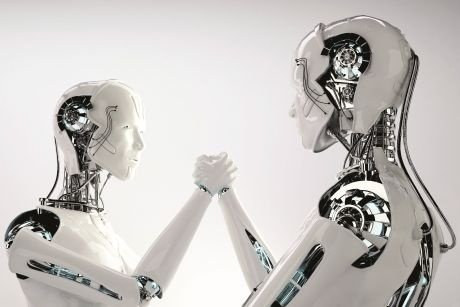
In about twenty years, everyone will be able to have their own robot just like they currently have a car or a smartphone, as new technologies, especially robotics, will contribute to shaping a world where artificial intelligence and robots will be involved in all areas of life. This is asserted by Daniela Rus, a professor of electrical engineering and computer science and director of the Department of Computer Science and Artificial Intelligence at the Massachusetts Institute of Technology at Cambridge University. She is not the only one who thinks this, and it is not science fiction.
The most famous futurist in the world, Ray Kurzweil, Google’s director responsible for new projects involving machine learning and language processing, author of the book ‘The Singularity is Near’, has predicted many changes driven by the development of new technology and has reportedly been correct in as many as 86 percent of cases.
Given the very rapid progress in robotics, it is hard to imagine which jobs smart machines will not perform in the near future, as robots that learn new skills every day have already been developed. The Japanese company Fanuc, the world’s largest manufacturer of industrial robots, has produced such robots, so it is certain that ‘mass slavery’ will mark the 21st century. Humans will enslave robots – or perhaps robots will enslave humans.
And while philosophers have not moved beyond the discussion of what being and time and ‘absolute nothing’ are for more than two thousand years, the fourth industrial revolution is underway, threatening the total dethronement of man. The economic power of the owners of new technology, artificial intelligence, and robots will be much greater than that of today’s arms and energy traders. But just as philosophers argue that time is relative, it is possible that changes during this century, in which very rapid technological advancement is expected, will mean an acceleration of not just a hundred but even 20,000 years. At least that is what Kurzweil claims, predicting that the power of computers will soon equal the power of all human brains on Earth and mimic the human brain, that we will experience virtual reality in about fifteen years with the help of implants, and that we will be able to ‘upload’ our minds into computers and thus remain digitally immortal.
Software will become the brain of the world, and as it becomes more perfect, technology will advance further, especially robotics, which has already proven its superiority in the application of robots in industrial processes. Fanuc engineers have programmed a robot that learns a specific process during an eight-hour shift, for example, taking items from one box and placing them in another. Experts refer to robot education as ‘deep learning’. During this, artificial intelligence uses a powerful microprocessor chip and algorithms that mimic neural networks and, with the help of large data sets, enable experiential learning.
The robot’s lesson of moving items from one box to another was recorded by a camera. The recordings showed that the robot ‘remembered’ what the object looked like every time it failed to perform the task accurately, which happened in only ten percent of cases.