If the world today consumes primary energy in the amount of about 11.5 billion tons of oil equivalent per year, and by 2035 the demand for energy will rise to about 18 billion tons of oil equivalent, the question is, says academic Mirko Zelić, president of the Scientific Council for Oil and Gas at the Croatian Academy of Sciences and Arts (HAZU), from which sources all that energy would come.
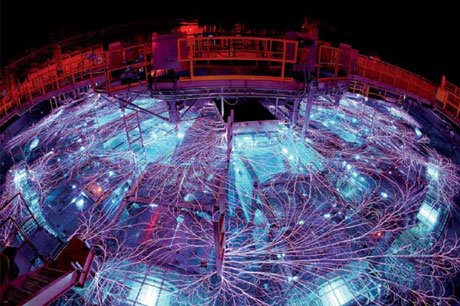
– The question is whether renewable sources can achieve at least a 30 percent share in the world’s energy needs by that time. According to estimates by serious experts, fossil fuels will play an important role in this century. And given that the price of oil is currently very low, investments in concessions for hydrocarbon exploration have also been reduced, which will result in an energy crisis. How fortunate it would be if we could meet our energy needs with renewable sources, but that is currently impossible, and what we can do in the given circumstances is to seek a synthesis between fossil and renewable energies. Fusion energy could save us, but until it reaches commercial use, the world must ensure sufficient supplies of fossil fuels during the transition period, and the danger is whether we will have capable personnel for that if mass layoffs continue in oil companies, who will conduct research and ensure the safety of wells – asks academic Zelić.
Croatia, says Zelić, used to produce about three million tons of oil and two billion cubic meters of gas. At that time, there was a small difference between the consumption and production of primary energy, and today in Croatia we have twice the consumption of primary energy compared to its production. Zelić advocates for the injection of CO2 into oil reservoirs, which even enhances the viscosity of oil and its extraction. Renewable energy sources must therefore be viewed today as supplementary and welcome, but they cannot yet be the main element of global energy.
– At INA-Naftaplin, while drilling in search of oil and gas, we also found layers of drinking and geothermal water. According to current knowledge, we have 24 geothermal fields in Croatia. Of these, in eight or nine fields, the water temperature is above 100°C, which is favorable for cogeneration, and the question is how to capitalize on geothermal energy. In the Dinarides, the geothermal gradient ranges from 0.015 to 0.025°C per meter of depth, the average European geothermal gradient is about 0.03°C/m, and the Pannonian Basin has the highest geothermal gradient of 0.049°C/m. Specifically, INA-Naftaplin’s exploratory drilling has found the deposits of the most energetically potent geothermal water in Velika Ciglen near Bjelovar with a temperature of 175°C, Lunjkovec-Kutnjak has about 140°C, Ferdinandovac near Koprivnica has about 125°C, Babina Greda and Rečica near Karlovac also have wells with about 120°C. I was a member of the Government Council of the Republic of Croatia for Croats outside Croatia on behalf of HAZU, and when I told them that Turks, Italians, Norwegians, and Irish are coming to buy concessions on our geothermal fields, our rich diaspora was astonished and said: ‘Well, why is no one offering us those concessions to invest in the utilization of that geothermal energy in Croatia?’. They are good when they need to cast their votes in elections, but they are bypassed when it comes to business and investment opportunities – says Zelić.