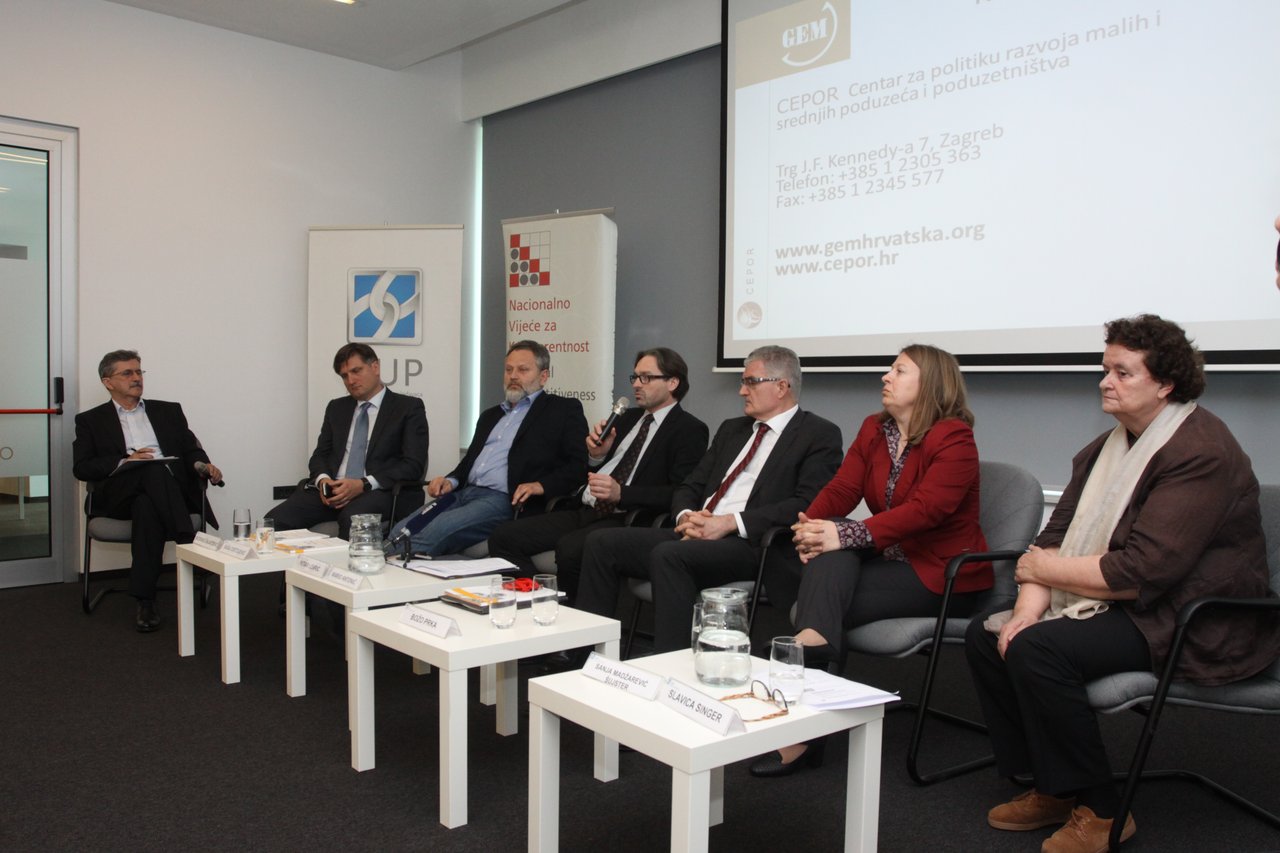
Croatia has the lowest motivational index in Europe, along with relatively high investments in technology, but few good products – these are the two most important conclusions of the international research conducted by the Global Entrepreneurship Monitor (GEM), which was presented to the public today at the HUP premises by Prof. Dr. Slavica Singer, a member of the National Council for Competitiveness and Chairwoman of the CEPOR Management Board, as well as the leader of the GEM national team for Croatia.
– This research is the largest global study of entrepreneurship based on the collection of primary data from a representative sample of the adult population and selected experts using standardized questionnaires. It observes entrepreneurship from the perspective of the individual and does not only deal with their economic life – explained Singer.
However, amidst a sea of catastrophic results, Singer highlights one category in which Croatia is far above the EU average, among the best. This concerns the entrepreneurial activity of employees in Croatia. This term refers to those who have developed a new product or service or who have launched a new business unit for their employer. Besides that, there are not many good news.
With other Europeans, we share a sense of fear of failure, the percentage of people who believe it is desirable to be an entrepreneur in Croatia is constantly declining, and moreover, in Croatia, entrepreneurs (alongside Spain and Greece) have the lowest status in Europe. Fewer people than in the rest of the EU notice business opportunities, and the motivation to enter entrepreneurial ventures is largely marked by necessity-driven ventures, which all leads to a low contribution to creating new value and new employment (low motivational index)…
– We are a non-entrepreneurial country by many elements. Out of 11 elements of the entrepreneurial ecosystem, Croatia ranks last in Europe in five elements. The biggest problem is the regulatory framework, and it is incomprehensible that no government has used our evidence regarding the problem of the regulatory environment. Changes must be radical and urgent, but that does not mean they can happen overnight. Sometimes it takes more than one government mandate for that – concludes Slavica Singer.