State-owned companies generate about 10 percent of GDP globally, account for about 20 percent of the market value of equity globally, and more than 10 percent of them are on the list of the largest global companies with an estimated total revenue of 3.6 trillion US dollars.
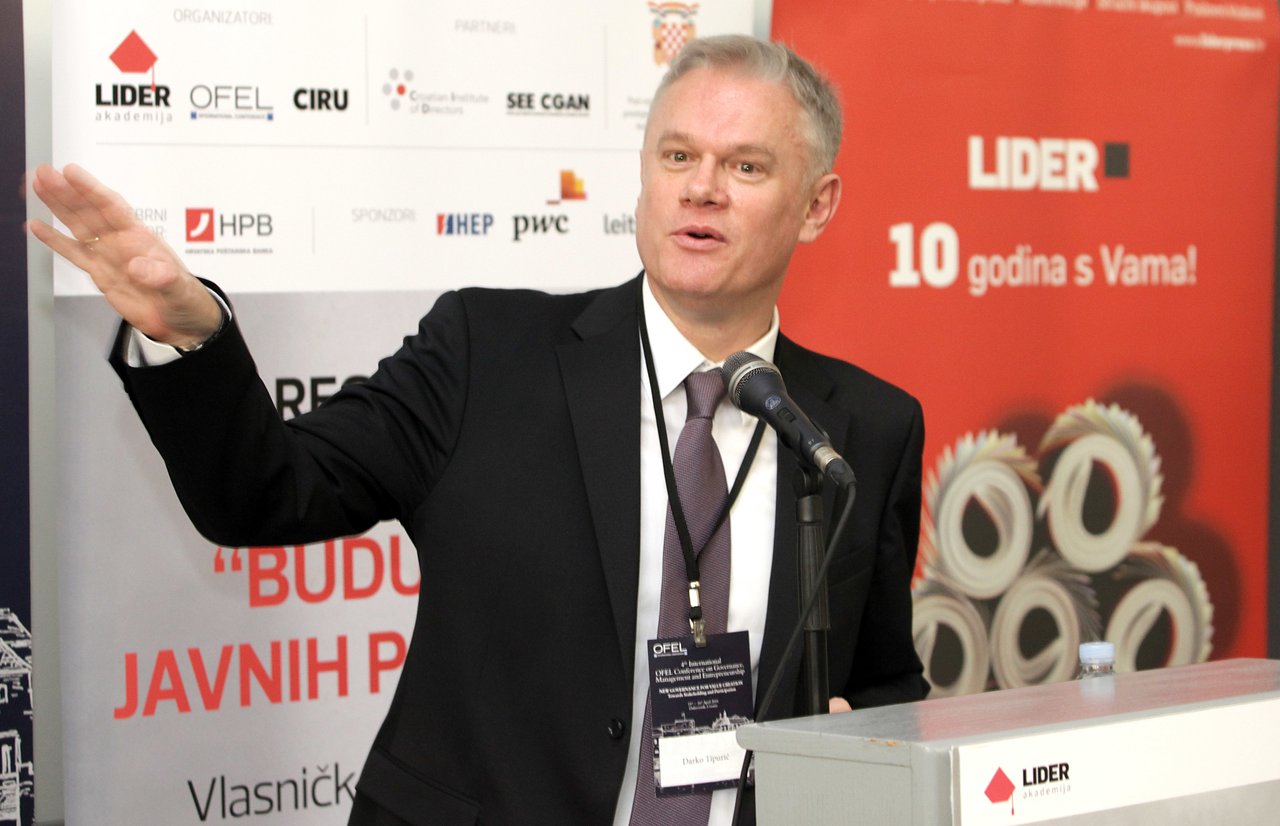
These are the data presented by Professor Darko Tipurić from the Faculty of Economics in Zagreb at the beginning of his presentation on the future of state-owned enterprises in the modern economy.
From 2005 to 2012, he continued, nine of the 15 largest global IPOs were made for state-owned companies. He emphasized that modern state-owned companies differ significantly from their predecessors; they have evolved into some hybrid organizational forms (mixed ownership structure and various control settings) with considerable independence in business operations.
– The number of state-owned companies has further increased due to the process of pre-bankruptcy settlements.
A large number of studies also show their inefficiency and negative impact on the economic activities of private companies, and consequently on the overall economy. There is a high concentration of debt and a greater risk of non-payment among public companies – Tipurić pointed out, presenting some more interesting data: 878 state-owned companies employ 101.6 thousand workers (15 percent), and the average salary amounts to 6,234 kuna, which is even 37.6 percent higher than in the private sector. The revenues amounted to 60 billion kuna (11 percent) in 2014, gross profit was 5.1 billion kuna (14 percent), and as much as 30.1 percent of state-owned companies reported a loss last year.
– The solution is privatization because the state cannot be a good owner. However, the risks of the privatization process are often forgotten, and national economic and public interests are sometimes subordinated to other interests – Tipurić believes.
The key problems are, he continued, a poor and inefficient model of corporate governance in public enterprises, a lack of a clear state strategy regarding their future, the problem of multidimensional and often conflicting objective functions, managerial and operational inefficiency, issues of insufficient quality, often also unprofessionalism and lack of expertise in supervisory boards and management, high concentration of debt and greater risk of non-payment, which creates additional fiscal risks for the state.
How can the way of organizing management structures and the model of corporate governance help raise the level of business performance and create value for state-owned companies?
– It can! Privatization is important, but it is not the only possible solution – emphasized Tipurić, highlighting essential conditions for shaping an efficient model of corporate governance, which are depoliticization, deideologization, and professionalization. A national strategy is also needed, he says.