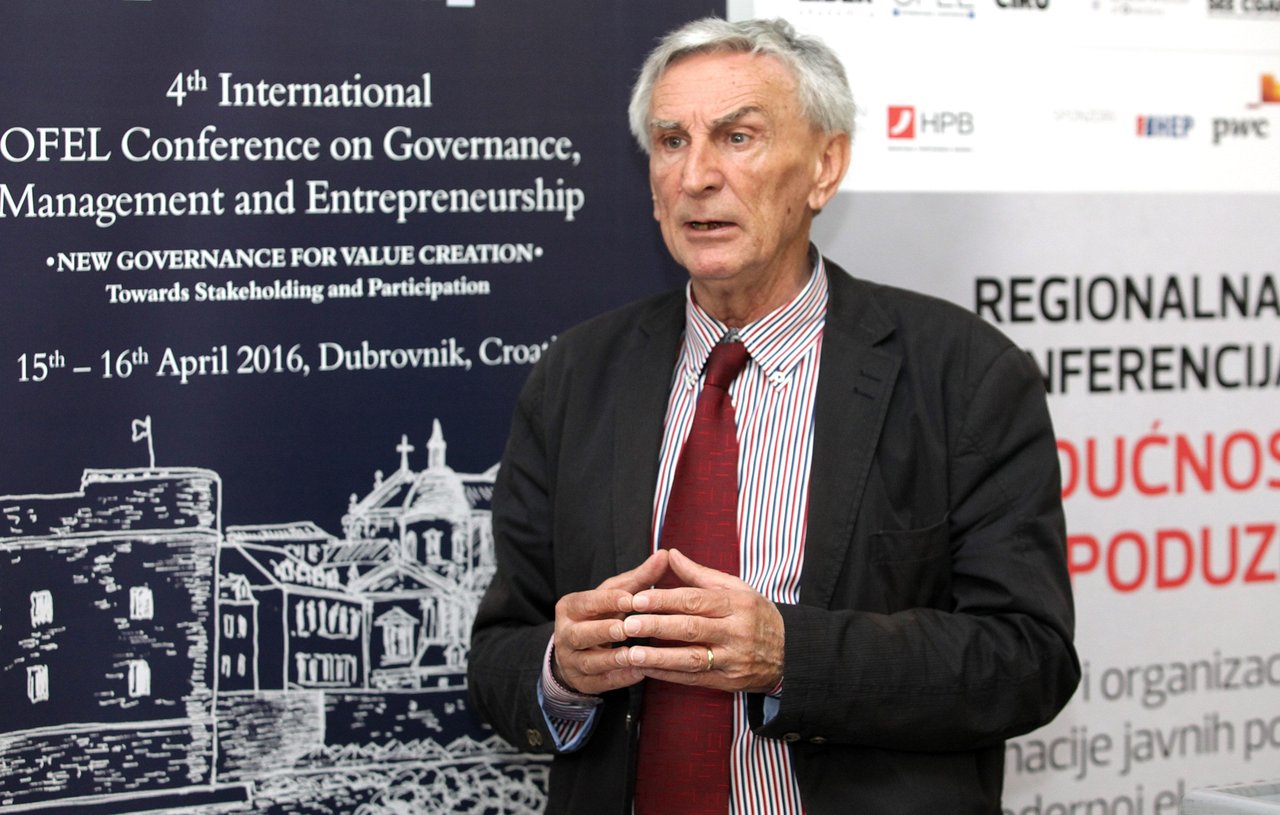
The afternoon part of the conference ‘The Future of Public Enterprises’ focused on public-private partnerships (PPP) and the restructuring of public enterprises. Professor Dejan Kružić from the Faculty of Economics in Split spoke on the topic of PPP – management reform and an innovative tool that can enhance the provision of public services, emphasizing at the outset that the experiences of numerous countries show that the limitations of resources in central and local units can be overcome by introducing the private sector into arrangements with the public sector.
-This allows the public partner to define the public service and the standards of its delivery, while the private partner takes on financing, construction risks, and by managing the project for many years, realizes benefits – the main features of PPP presented by Kružić.
He also added that PPP represents a cooperation between the public and private sectors with synergistic effects, offers a long-term sustainable approach to improving public services and public infrastructure, contributes to better market valuation of public assets, and leads to greater value for taxpayers and the economy as a whole.
-PPP is not the same as privatization. Privatization represents the transfer of public ownership and responsibility to the private sector as a whole, while PPP involves the introduction of the private sector into the construction, modernization, financing, and management of public services under long-term contracts where the public sector retains control and responsibility for the functioning of the system – explained Kružić, emphasizing that PPP is based on the sharing of risks, costs, and benefits among partners.
The advantages of PPP, he continued, are the long-term nature of contracts, relief from the current borrowing of public authorities, the public partner does not have to secure significant financial resources for the realization of the investment, and receives quality for the paid service. The limitations, however, are the lengthy process of selecting partners and the existence of distrust and misunderstanding among partners.
He cited some examples of PPP from the USA, Canada, and the effects of PPP in Croatia, which is highly ranked due to its well-developed legal and regulatory infrastructure, placing it among the top countries in Eastern Europe, where 7.7 million kuna of PPP projects have been realized.
For a successful PPP, emphasized Kružić, political will and leadership are needed, as well as a supportive legal framework. It is also essential to involve the public, continuously monitor project performance, and most importantly; it is crucial to choose the right partner for PPP.
-PPP is not a miraculous solution for the public sector, but it can significantly improve the quality and price of public services. Not all problems of resource shortages and budget constraints in the public sector can be solved through PPP, but it can ensure a greater number of constructed public infrastructures. It is also possible to generate new activities, new jobs, and increased revenues through PPP – some of Kružić’s recommendations that laid a solid foundation for discussion on the same topic.