
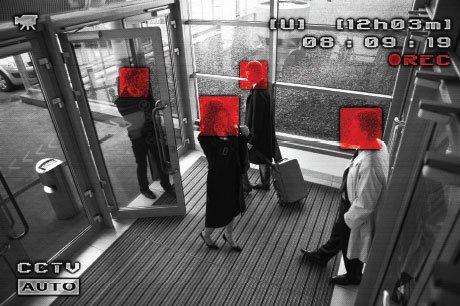
Cameras on every corner, monitoring systems that regulate traffic, and officers who control the pulse of the city in eight-hour shifts using monitors have become everyday occurrences. The monitoring system is one of the fundamental components of a successful smart city, designed to function as assistance to law enforcement. The vast amounts of data collected by computers alongside ubiquitous cameras are intended to be the core of smart policing in a smart city.
Installations ‘closed-circuit television’ (CCTV) and video surveillance cameras that transmit signals to a specific location where live feeds are monitored have been installed for years, for example, throughout London and Dubai. Law enforcement agencies most often use this method to analyze problematic urban points or to profile at-risk social groups. The focus has thus shifted, analysts say, from punishing individuals to preventing criminal acts. Does this lead to what Philip K. Dick wrote about, and which Steven Spielberg later turned into a blockbuster? Is this a police state 2.0?
Enemies of the Ordinary Person Things have gone furthest in the American state of California, specifically in the city of Santa Cruz. With sixty thousand residents and the highest rate of criminal activity per capita in California, this city seemed like a perfect testing ground for the concept of crime prevention before it actually occurs. Things functioned as follows: police patrols would close an imagined garage at 5 PM for about fifteen minutes because most crimes in that area occurred at that time. ‘The goal is not to arrest people, but to prevent crime’, they spoke in an enlightening tone at the police department of this dangerous Californian city. In the first year of implementing this experiment, car thefts in Santa Cruz fell by four percent, but after that, crime rates increased every year despite the revolutionary police approach, statistics showed.
How problematic this system truly is is best evidenced by the program ‘Stop and Frisk’ conducted in New York eight years ago. It was an attempt at preventive suppression of criminal activities based on data analysis of previous offenders, but as much as 83 percent of those who were stopped and searched were black. Here, of course, it is not about a smart city system, but about independent police investigation, yet the principle is very similar and serves as a good indicator of how misleading statistics can be, and the practical application of conclusions based on statistics can be dangerous. The police in Los Angeles also stirred up a lot of dust by admitting that in 2012 they recorded residents of Compton from a private plane using technology similar to that used by the U.S. military in Afghanistan and Iraq. High resolution and zooming are the main features of this surveillance system that can operate continuously for six hours. The entire system costs less than six hours of police helicopter use and simultaneously covers 10,000 times more area than police officers in a helicopter can.
– Paparazzi are the enemies of the famous, and drones, cameras, and surveillance systems are the enemies of the ordinary person – humorously concluded British writer Alex Morritt.
The industry dealing with surveillance systems in U.S. cities is worth $37.7 billion, and as much as 80 percent of residents in the most powerful country in the world support the initiative for surveillance systems to be in all public places.


