Home / Companies and Markets / Global surplus of crude oil is a key problem for the price of ‘black gold’

Global surplus of crude oil is a key problem for the price of ‘black gold’

Commodity markets are finally showing signs of life after a brutal sell-off over the past couple of years. During the first quarter, the Bloomberg Commodity Index fell to a value it last had 17 years ago, and many key commodities struggled with oversupply and declining demand.

At the same time, mining and energy companies experienced a drop in production costs due to weaker local currencies and falling energy prices. However, signs of stabilization were seen in March, and the second quarter could finally show how many interesting and dynamic assets are in the commodity market. This is stated by Ole Hansen, the chief commodity strategist at Saxo Bank, in the latest forecasts for the second quarter ‘Essential Trades’.

– The best and surprisingly most successful commodity during the first quarter was gold, which started the year with a price doomed to failure due to expectations of rising U.S. interest rates and the dollar. Looking back, the recovery shouldn’t have been so surprising as the direction of gold after the start of the interest rate hike cycle in the U.S. was upward, while the dollar began to fall – Hansen recalls and explains that uncertainty, falling interest rates, volatility in the stock market, a weaker dollar, and rising inflation usually cause an increase in the price of gold.

Besides the latter, all other factors have been present in recent months and contributed to the change and ultimately changed interest and increased favor towards gold. As we enter the second quarter, gold has maintained its strength despite improved conditions in other markets. Some analysts consider this a warning sign, and if gold continues to rise, there will be no significant recovery for commodities that depend on economic growth, such as industrial materials and energy.

– Government debt in the developed world of about $16 trillion currently yields one percent or less, as Bloomberg reports. This move towards ever-lower and even negative rates is likely one of the main reasons why gold is once again interesting to investors. Central banks, except perhaps the U.S. FOMC, will continue to support the low-rate regime, so investors are consolidating their positions in gold – says Hansen, emphasizing that he does not expect a significant recovery in the price of gold in the second quarter, and it will trade at a maximum level of $1,310 per ounce.

If we disregard the sense of uncertainty in the market that favors gold, we see potential in silver, say Saxo Bank. In the first quarter, silver reached its lowest level relative to gold in the past eight years. Namely, half of the world’s silver production is a byproduct of extracting industrial materials, and as a decrease in production is expected in the industrial metals mining sector, silver production will also decrease, thereby improving the prospects for price recovery. Therefore, we remain more inclined towards silver than gold during the second quarter, optimistic about investments in silver at the Danish investment bank.

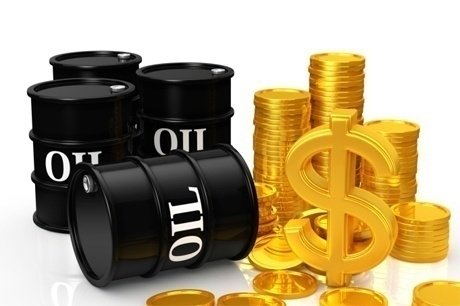
During the first quarter, oil took on the role of a driver of everything and anything, but an improvement in sentiment is already visible compared to the dark period in mid-January when the price of Brent oil fell to its lowest point in 12 years. The improvement in price and trading is mainly due to OPEC’s verbal intervention to support the price, reduced concern about a drop in demand, primarily related to China, and occasional supply disruptions within and outside the OPEC alliance.

– However, more importantly, is the slowdown in production in the U.S., which is expected to continue in the coming months unless the oil recovery experiences an absurd and unexpected return to $50 per barrel. The market will gradually focus on the moment of expected supply and demand matching, and according to current assumptions, this could happen before the end of 2017, as was expected until recently. However, as important as it is to achieve a balance between supply and demand, the global surplus of supply is still a key problem whose resolution may take time – says the head of commodity markets at Saxo Bank.

In the long term, the multi-billion dollar reduction in investments in finding new oil sources will support the recovery of prices in the coming years. However, it is uncertain when this will exactly happen, so we will very likely see several false starts of positive periods that will only be a step back, with renewed sell-offs. When it comes to the second quarter, we expect oil prices between $35 and $40 per barrel, but without the risk of going significantly lower, conclude Saxo Bank.