Public transport, resource management, crime, social networks, emergency services, today all these sectors can be monitored in real-time through IBM’s City Heart Beat application, making life easier for citizens as well as city authorities.
This was stated by Alexey Ershov, Vice President of IBM responsible for Smarter Cities business in Europe, when he spoke about the revolution of mobile applications and new technologies that enable cities to achieve an unprecedented level of communication with citizens during the conference ‘Smart cities 2016 – Smart Cities: The Future Starts Now‘.
– Public transport, resource management, crime, social networks, emergency services, today all these sectors can be monitored in real-time through IBM’s City Heart Beat application, making life easier for citizens as well as city authorities – he said, reflecting on the innovations introduced by Madrid, Lyon, Stockholm, the Chinese Bandung, and Rio de Janeiro.
As part of IBM’s Smarter Cities Challenge, the company has sent over 800 experts to more than 130 cities around the world to pro bono solve pressing issues. The most interesting part of Ershov’s presentation was the introduction of achievements in artificial intelligence such as the Watson computer that defeated Garry Kasparov in chess and won against two of the strongest quiz players in America on the show Jeopardy.
– No matter how good technology is, people are irreplaceable in some jobs – Ershov concluded.
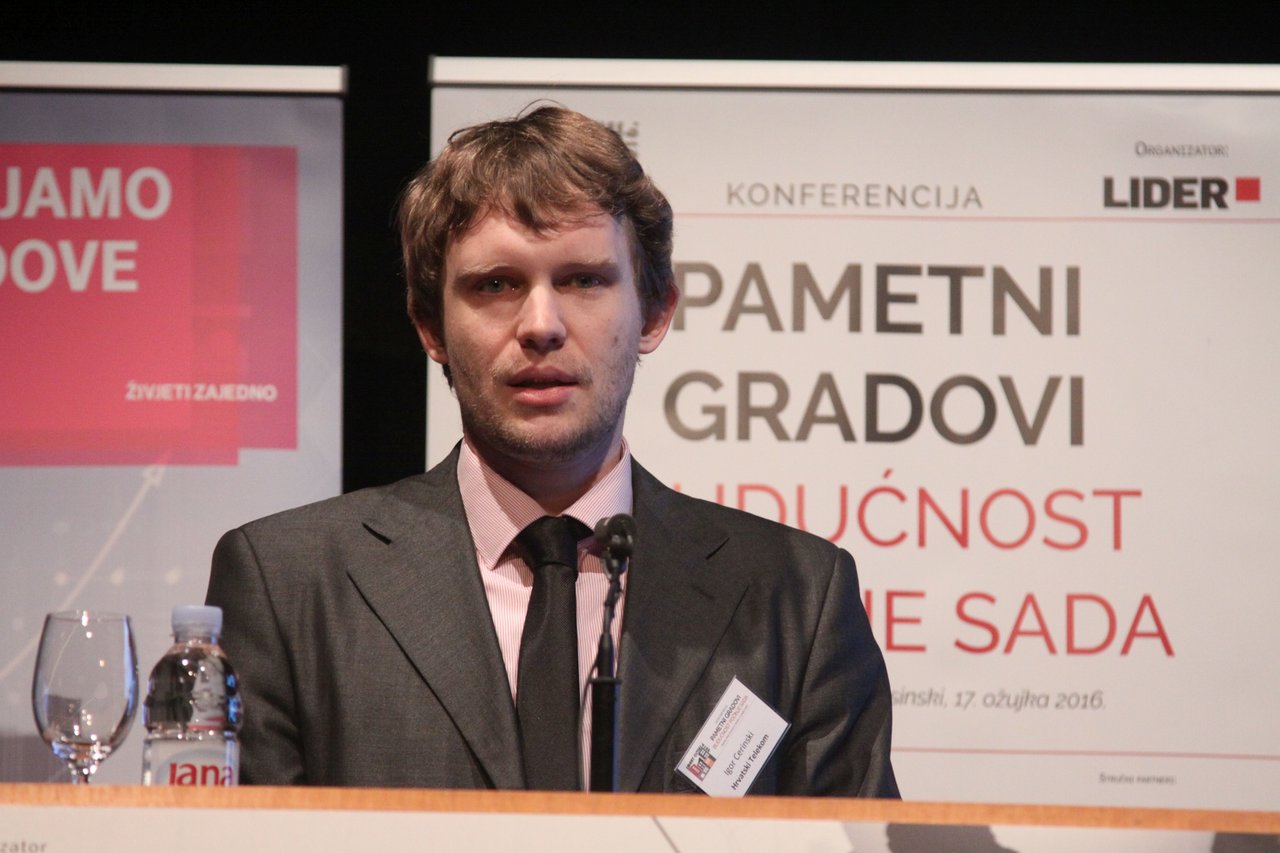
Igor Cerinski from HT addressed examples of good practice in Croatia, which, according to him, are plentiful. He emphasized that the goal of innovations must be a quality system, not just solving individual problems.