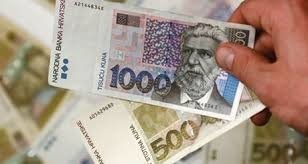
Lider is not against high penalties for serious offenses, such as tax evasion, falsification of books, etc. However, there are also unjustifiably high penalties for minor offenses. The biggest victims of such budget filling are small entrepreneurs and craftsmen, who are not even warned about minor mistakes before being punished.
Edis Felić, a journalist for the business weekly Lider, sought examples of draconian penalties that entrepreneurs must pay for minor offenses. He found 54, which means there are almost certainly more, limiting himself only to legal regulations related to the economy.
You can read more about this topic in the business weekly Lider, which you can buy at kiosks. On Monday, we published the first part of the story about minor offenses for which you face draconian penalties, and now we bring you the continuation.
Law on Consumer Information about Food
10,000 – 30,000 kuna
42. If the list of food ingredients is not listed in descending order according to the mass determined at the time of their use in food production, which is contrary to Article 18, paragraph 1 of Regulation (EU) No. 1169/2011.
43. If it uses synonyms instead of the terms precisely prescribed by Regulation (EU) No. 1169/2011.
(Art. 8, para. 1.)
Law on Food Hygiene and Microbiological Criteria for Food
50,000 – 100,000 kuna
44. If it does not establish or implement a system and procedures based on the principles of the HACCP system according to Article 5, paragraphs 1 and 2 of Regulation (EC) No. 852/2004 and Article 7, paragraph 1 of this Law.
45. If it does not carry out constant monitoring at critical control points in food production and trade where hazards arise in accordance with Article 5 of Regulation (EC) No. 852/2004. (Art. 15, para. 1.)
Law on Food
50,000 – 100,000 kuna
46. If it has not established systems and procedures for food or animal feed traceability so that it can identify any legal or natural person supplying it or who has supplied it with food, animal feed, animals for food production, or any other substance intended for incorporation or that can be expected to be incorporated into food or animal feed, which is contrary to Article 18, paragraph 2 of Regulation (EC) No. 178/2002. (Art. 34, para. 1.)