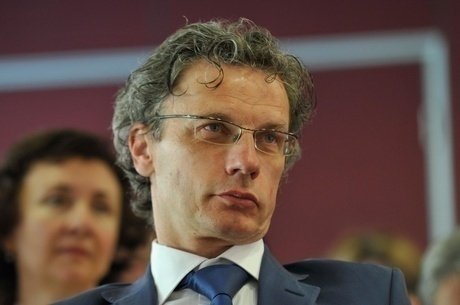
Croatia will not enter the European Monetary Union by 2020, but it could enter the Exchange Rate Mechanism (ERM II), which would be an effective start of preparations for the introduction of the euro, said the governor of the Croatian National Bank (HNB) Boris Vujčić on Wednesday.
Prime Minister Tihomir Orešković stated in Berlin on Tuesday that he discussed with Governor Vujčić the initiation of the euro introduction process in two years, “and in four years it would be fully implemented.”
In response to a question about the conversation with Orešković regarding the introduction of the euro, the central bank governor reminds that “the possibility of introducing the euro depends on the readiness to seriously approach the process of fulfilling the National Convergence Plan and the National Reform Program, which would realize the prerequisites for switching to the euro, primarily the structural changes that would enable an increase in the potential growth rate of the economy.”
“In order to even be in a position to switch to the euro, we would first need to significantly reduce the share of public debt in GDP over the next two years, with projections showing that such a trend is sustainable in the medium term, and then proceed to discussions about entering the Exchange Rate Mechanism (ERM II). After entering ERM II, during the next two years we must meet the so-called Maastricht criteria related to the inflation rate, long-term interest rates, budget deficit, public debt, and the stability of the kuna exchange rate against the euro. Our biggest problem in meeting the five necessary criteria for switching to the euro is reducing the share of public debt in GDP, which is currently at around 85 percent, as it should be significantly reduced in the next two years (2017 and 2018),” says Vujčić.
However, the governor adds, it is necessary to know that it is not mandatory to meet the fixed criterion of reducing the share of public debt in GDP to 60 percent for the transition to the euro, but it is also possible to reduce the share of public debt at a sufficient pace, following which the European Commission can decide that we are credible in this regard and ‘approve’ our transition to the euro.
“By 2020, we will not yet enter the European Monetary Union, but we could enter ERM II, which would indeed mean an effective start of preparations for the introduction of the euro, which the Prime Minister and I discussed,” emphasizes Vujčić.
“Overall, the National Convergence Plan and the National Reform Program must emphasize sustainable reduction of the share of public debt in GDP, or structural reforms aimed at increasing the competitiveness of the economy and increasing the productivity growth rate, which are key prerequisites for sustainable reduction of the share of public debt in GDP. In this way, these documents can and, in my opinion, should become the backbone of medium-term economic policy, which is, regardless of the introduction of the euro, which depends, it should not be forgotten, on the state of the eurozone, a desirable goal,” concludes the governor of the HNB.
Introducing the euro is a bad idea for Lovrinović
Member of Parliament Ivan Lovrinović from the Most party assessed on Wednesday that introducing the euro in a few years would be “a fast track to a Greek scenario” and that we should not rush into it. He reminded that some countries that have been in the European Union for a long time, such as Denmark, Sweden, Poland, or the Czech Republic, have not decided on this step.
“Denmark will not introduce (the euro) because it has that clause, Poland has announced a postponement indefinitely, the Czech Republic as well. We should not rush into this, as it is one of the key tools within the overall European policy for maintaining the competitiveness of the national economy,” said Lovrinović, commenting on Prime Minister Orešković’s statement.
According to Lovrinović, Croatia “will not be ready to discuss the euro in ten years, let alone introduce it.” He also pointed out that the rapid introduction of the euro is “the strategy of the previous and current leadership of the HNB, as they encouraged rapid and comprehensive euroization of the financial system and the entire economy, thus exposing the country to unprecedented currency risk.”