Home / Business and Politics / For ministers, not everything is about money; too much is in real estate

For ministers, not everything is about money; too much is in real estate

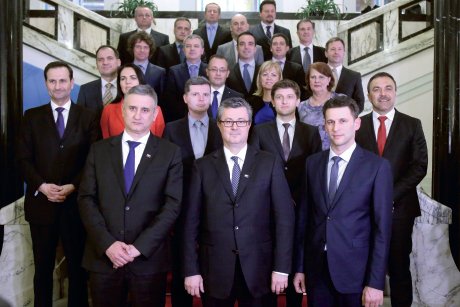
These days, the public is entertained by peeking into ministers’ wallets. The media’s scrutiny of the wealth status of new ministers is becoming somewhat distasteful.

In hair salons, people talk about who has more, who has less, and even more maliciously, who has a larger loan and how they are repaying it. However, I was interested in the asset cards of the entire government. And here I was disappointed. Not because our ministers are rich or poor, but because they are extremely conservative in managing their assets.

For them, the saying that not everything is about money truly applies, as something is also in real estate. And mostly residential. The exception is Minister Panenić, who invests in agricultural land. Of the total personal wealth of 69 million, as much as 72 percent (50 million) is reported in real estate. The situation is even worse if we exclude the Prime Minister’s large savings and the investments in the stock market by Zdravko Marić and the family of Jurlina Alibegović. Other ministers hold almost 90 percent of their wealth in real estate.
Why is this bad? Because they are part of the strongest Croatian lobby – the rentier lobby. And I do not believe that these rentiers will be innovative in writing and implementing programs that could pull us forward. Why struggle with high technologies when you have a house, an apartment, and rental properties that generate income? Only two out of 20 ministers who disclosed their assets have significant holdings in stocks, and only three reported savings.

On the other hand, as many as 14 of them have loans. How will these highly indebted ministers reduce the dramatic indebtedness of the state? I fear that all these representatives of society have a rentier delusion in their heads that favors tourism at the expense of production. I have nothing against tourism. Unfortunately, we do not have domestic products that we could offer to foreigners, except for sun and sea. Therefore, the government’s asset card does not give much hope that this rentier policy will change in this mandate.