Home / Business and Politics / HUP: Up to eight billion kuna of public money is spent annually in a non-transparent manner

HUP: Up to eight billion kuna of public money is spent annually in a non-transparent manner

According to estimates, up to eight billion kuna of public money is spent annually in Croatia in a non-transparent manner. HUP in its proposal calls for greater control of the entire process and a higher degree of transparency in the procedure and documentation, as well as a change in the law.

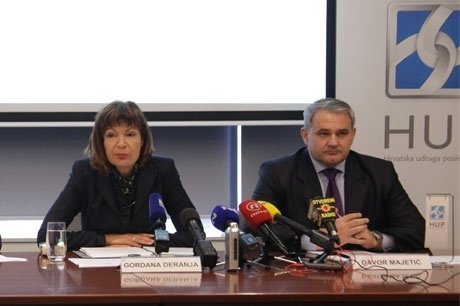
The Croatian Employers’ Association has prepared a proposal for the reform of the public procurement system, which it will present to social partners and relevant authorities. The preparation of a proposal for a new Public Procurement Act is also in its final phase, in which HUP has included the community of associations of counties, cities, and municipalities as users of the process. With this intention, a meeting of the Working Group was held at HUP’s premises, attended by more than 40 representatives of employers, local government, and self-government.

The total value of public procurement in Croatia amounts to about 42 billion kuna annually, which represents about 12% of GDP. Approximately 1,700 contracting authorities and about 5,000 bidders participate in public procurement, concluding around 22,000 public contracts each year. The criterion for selecting the economically most advantageous offer is represented by only 0.95%, while the same criterion at the European Union level is represented in 80% of public procurement contracts. According to estimates, up to 20% of public procurement procedures in Croatia are conducted in a non-transparent manner. In other words, up to eight billion kuna of public money is spent annually in a non-transparent manner.

One of the recommendations that Croatia received from the European Commission within the framework of the European Semester is a wiser involvement of the state in the economy, explicitly stating the need to prevent corruption in public procurement and in state-owned enterprises, as well as strengthening the transparency and efficiency of public procurement at the central and local levels.

HUP warns of the need to shift the public procurement system from the lowest price criterion, which encourages abuse and corruption, to the criterion of the economically most advantageous offer, along with the introduction of quality control procedures and greater transparency of the system. Among the reasons for the necessary change in the public procurement system, HUP cites the fact that this system is also a significant generator of illiquidity, as it encompasses health institutions whose payment deadlines extend beyond 300 days.

Representatives of HUP and local and regional government and self-government who were present at the meeting agreed that it is necessary to urgently eliminate the shortcomings of the public procurement system, and all present agreed that, since this is a very demanding system, in which the most important resource is indeed people and their knowledge, part of the problem in the system could be solved by establishing centers for specialized knowledge in the field of public procurement. After aligning views on the proposed amendments to the Public Procurement Act and suggestions on how to strengthen the system with better control, HUP will inform all relevant institutions, ministries, and the Government in order to achieve the best possible solution through broad interdepartmental cooperation and enable the introduction of a more responsible and transparent model of public procurement.

All participants in the meeting agreed that the existing Public Procurement Act must be changed to eliminate the identified shortcomings and to enable the improvement of the public procurement system in the interest of all – both those who procure goods and services in this way and economic entities participating in public procurement procedures, and above all in the interest of all taxpayers.