
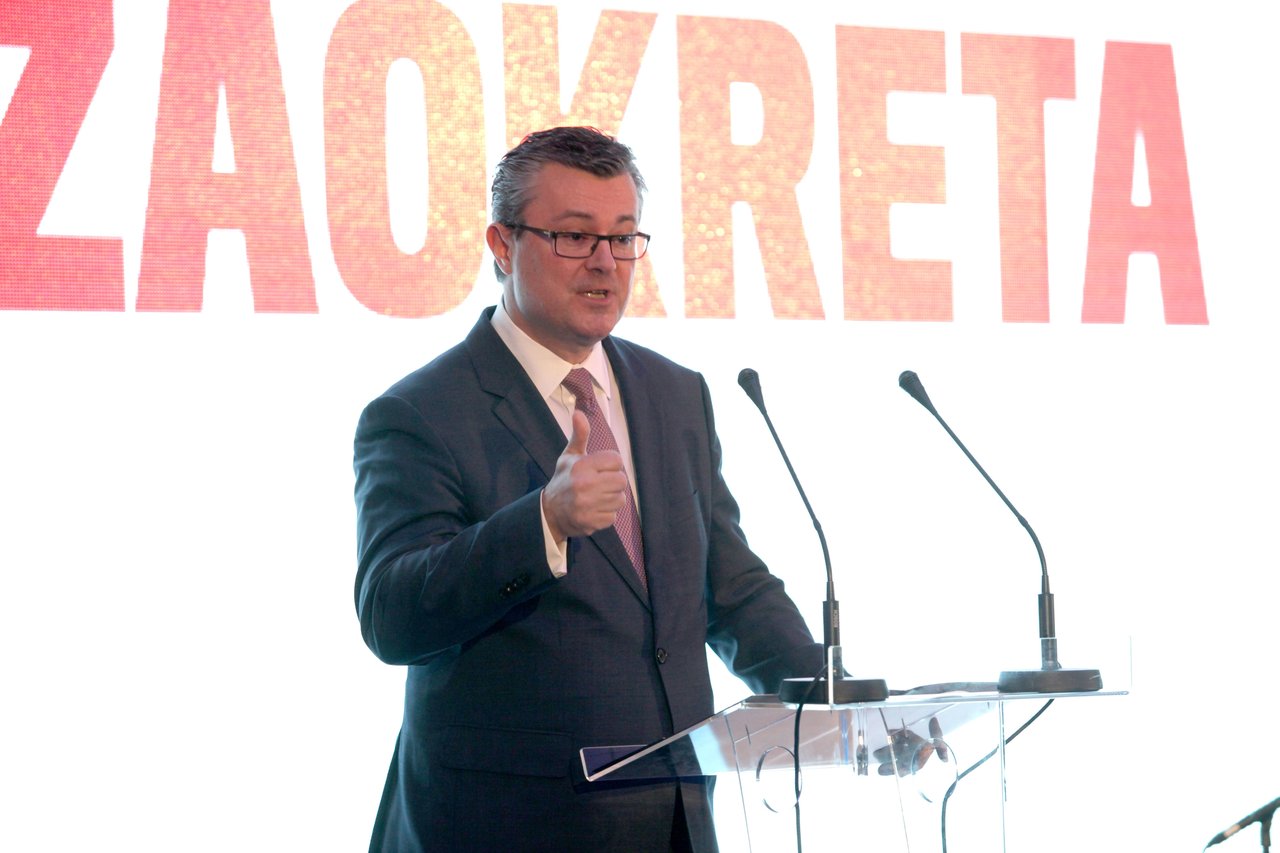
Prime Minister Tihomir Orešković announced on Tuesday that the use of the second pension pillar is being considered to reduce highway debt and an IPO through which citizens would be offered the opportunity to invest in highways.
He mentioned that the highway debt is around 4.5 billion euros and that considerations are underway on how to utilize the second pension pillar and enable citizens to invest in highways through an IPO (initial public offering).
– I believe this is a good investment. We will present it when the time is right, but we are heading in that direction, said Orešković.
– We will communicate the budget on March 10, we will not communicate everything today. We need to create a positive climate, we have some concrete steps that we can take very quickly, and they will impact not only the reduction of debt but also the interest rates that have a direct impact on the budget, said Orešković in response to journalists’ questions after his presentation at the “Budget Turnaround” conference.
The government is open for business
Speaking at the conference organized by EPH and the Croatian Chamber of Commerce, Orešković stated that in the past 30 days, in discussions with investors, he conveyed that the government is open for business and will do everything to attract investments. He mentioned that Kitzbühel was the first opportunity about a month ago to present plans and ideas to investors who hold more than 80 percent of Croatian debt.
– I can say that they reacted positively, emphasized Orešković.
He also noted that they are now waiting for the budget, as this will be the first move that will show the direction of this government.
He pointed out that spreads on Croatian bonds are decreasing, which means that investors have started buying Croatian bonds, convinced that the economy will pick up, and the new government will focus on investments and creating a positive climate. He reminded that he communicated in Brussels with the European Commission about changes that will be introduced to improve the economic climate. He announced that European Commissioner for Economic and Financial Affairs Valdis Dombrovskis will arrive in Croatia on Friday.


