
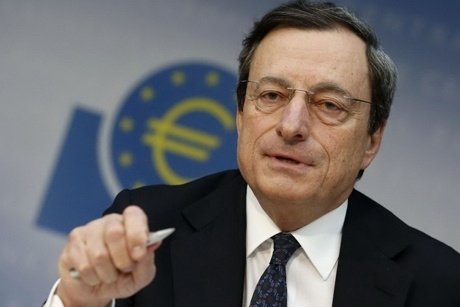
President of the European Central Bank (ECB) Mario Draghi stated that banks are now better protected from collapse than before the financial crisis and that the ECB will respond if necessary to stimulate economic growth.
In a speech at the European Parliament, Draghi said on Monday that banks and the entire financial system are now much more resilient than they were before. He attempted to alleviate concerns about the sharp decline in bank stock prices.
Since the beginning of the year, the STOXX index of the eurozone banking sector has fallen by more than 25 percent as investors fear the consequences of falling commodity prices, stricter regulations, and low interest rates on bank operations.
“The sharp decline in bank stock prices reflects the sector’s greater sensitivity to weaker-than-expected economic prospects,” said Draghi. However, he added that banks now have better capital foundations than they did during the eurozone debt crisis four years ago.
Low profitability and nearly 1 trillion euros in bad loans, a legacy of the European debt crisis, are pressuring the banking sector, but banks are now well-capitalized after being under pressure from regulators for years to strengthen their capital.
“The situation in the eurozone banking sector is now very different from what it was in 2012,” emphasized the ECB chief.
ECB will not hesitate to respond
Given the signs of weakening in the eurozone economy and low inflation due to the sharp drop in energy prices, Draghi stated that the central bank is ready to play its role in strengthening the economy and stimulating inflation growth, which is far from the ECB’s target levels of around 2 percent.


