
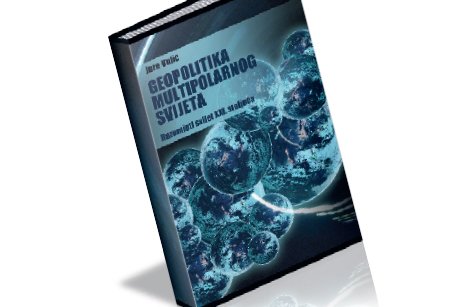
The contemporary process of geopolitical multipolarization of the world is faced with new geopolitical, geo-economic, geo-energetic, military-security, and demographic global challenges.
Putin’s Russia, the planetary economic dynamics of China, and the regional geopolitical powers of India, Turkey, Iran, and Brazil increasingly call into question the status of the superpower USA and impose themselves as unavoidable global geopolitical players. The geopolitical changes that have occurred (or are still occurring) in the last two decades have been very intense, so it is necessary to examine the credibility and validity of the thesis on contemporary geopolitical multipolarity? It is certain that new, more complex geopolitical, geocultural, and geo-economic global challenges require a redefinition of geopolitical horizons.
Geopolitics of a Multipolar World
Jure Vujić
Alfa, Zagreb, 2015.
When the first edition of ‘The Second Sex’ appeared in 1949, it caused a real social scandal, especially due to its views on motherhood. Discussions, attacks, and approvals followed. Simone de Beauvoir’s call for the liberation of women through work and her persistence in proving that ‘female nature’ is merely a social construct have led to the book being regarded as a pillar of feminism to this day. The book deals with the identity and otherness of women and presents it from numerous perspectives: biological, psychoanalytical, Marxist. All of this is done through the lens of existentialism, a philosophy that de Beauvoir championed. The author also addresses literary portrayals of women through the examples of D. H. Lawrence, Breton, Stendhal, etc.


