
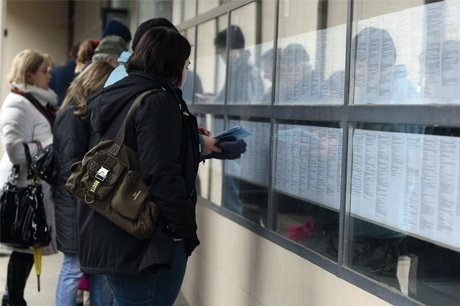
At the end of January, 293,236 unemployed persons were registered in Croatia, which is an increase of 2.7 percent or 7,768 persons compared to the previous month, and a decrease of 10.9 percent or 35,994 persons compared to January of last year, according to data published on Wednesday by the Croatian Employment Service (HZZ).
January marks the fifth consecutive month in which an increase in the number of unemployed persons has been recorded on a monthly basis.
However, according to daily data from HZZ, it seems that this trend could be interrupted in February. Namely, according to data from the HZZ website published on Wednesday afternoon, there were 292,819 persons in the unemployment registry, which is 417 persons less than at the end of January, and 16,609 job vacancies were also announced.
HZZ data on unemployment and employment in January show that 21,211 persons exited the registry in the first month of this year, which is one percent less than in January 2015. Of these, 11,992 persons were employed, while 9,219 persons left the unemployment registry for other reasons.
In January, 11,270 persons were employed based on the establishment of an employment relationship, and 722 persons based on other business activities.
The recorded employment based on employment relationships was most common in the manufacturing industry (2,347 persons), wholesale and retail trade (1,600 persons), education (1,309 persons), accommodation and food service activities (1,295 persons), administrative and support service activities (972 persons), and construction (872 persons).
By counties, in January, the City of Zagreb led in employment (1,655 persons or 14.7 percent of the total number of employed based on the establishment of an employment relationship), followed by Split-Dalmatia County (1,270 persons or 11.3 percent) and Osijek-Baranja County (1,060 persons or 9.4 percent), etc.
During January, a total of 28,979 persons were newly registered in the unemployment registry, which is 14.5 percent less than in January 2015, of which 74.2 percent or 21,505 persons came directly from employment. From inactivity, 21.9 percent or 6,360 persons entered the registry, from other business activities 1.5 percent or 437 persons, and from regular schooling 2.3 percent or 677 persons.


