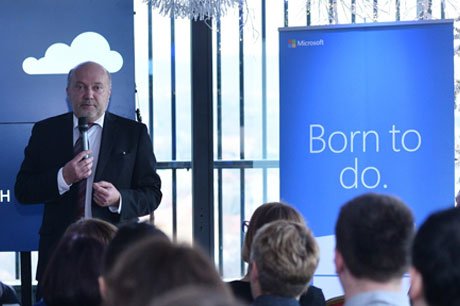
Microsoft Croatia held a business conference today in Zagreb, Financial Industry Day, where participants from the financial industry from Croatia, Slovenia, and Bosnia and Herzegovina could learn from international and domestic experts about global trends in the financial industry, using technological solutions to build better relationships with clients and generally improve business operations.
– Today, there is a great need for financial institutions to adapt to global technological trends, which include data analytics, social networks, mobility, compliance, and cloud computing. Banks are becoming increasingly digital and accessible to their customers at any time, from any location, and through any communication channel and device. It is therefore not surprising that mobile banking grew threefold from 2012 to 2016, said Natasha Pavlova, Industry Market Developer Manager for CEE at Microsoft.
The engagement of banks on social networks is also increasing, which aligns with estimates from consulting firm Accenture that banks with multiple social media channels and mobile banking models will be able to double their annual growth rate from 4% to 8% or more and reduce costs by 20 percent or more, Pavlova stated, adding that the importance of being active on social media is underscored by the fact that 80 percent of Fortune 500 companies are present on Facebook, 97 percent on LinkedIn, and 83 percent on Twitter, while 34 percent of the largest investors use social networks for personal financial needs.