
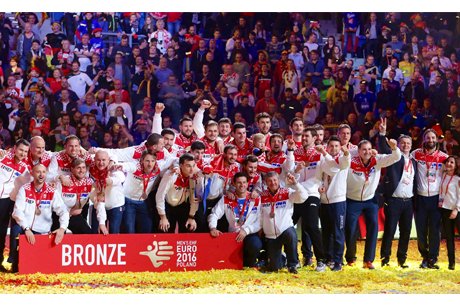
The gloomy socio-political situation momentarily took a back seat. The feeling of happiness and satisfaction was bestowed upon Croatian citizens by the handball players at the European Championship in Poland, which concluded on Sunday.
The incredible Croatian handball players, whom no one believed in when they left for the European Championship in Poland, won the bronze medal and played a historic match against Poland. By defeating Norway in the battle for third place, which opened the path to the semifinals by outplaying the French, they rightfully claimed the medal and continued the rich handball story. The hero of the match, just like in that legendary, ‘space’ match against Poland, was Ivan Stevanović, the miraculous Rijeka native, goalkeeper of PPD Zagreb. For the first time in the national team at 33 years old, he finally showed that Croatia has a goalkeeper who can decisively defend like the French Thierry Omeyer and the Danish Kasper Hvidt (who is no longer in the national team). He played confidently, fiercely, and fearlessly, constantly boosting morale with his saves and, if it can be said, he may be the most deserving for Croatia’s success. With the third place, the handball players, with a rejuvenated team, directly qualified for the World Championship in France in 2017, and Manuel Štrlek was named the best left wing in the championship team. The championship was won by Germany with the youngest squad in the competition, while Spain came in second.
The credit rating of Croatia by Fitch Ratings for borrowing in foreign currency remains at BB, while for borrowing in kuna it is at BB+ with negative outlooks. They pointed out that Croatia’s gross debt has reached 89 percent of GDP, that they expect an increase to 92.4 percent next year, and that the gross external public debt has even reached 110 percent of GDP. They expressed doubts that the new government could achieve its goals due to a coalition that does not seem solid and political inexperience, they said, of the new Prime Minister Tihomir Orešković. They are optimistic about the announced reduction of the deficit from 5 percent in 2015 to 1.5 percent this year. Orešković responds that the previous government had four years and political experience and that its rating still fell twice. According to him, the most important results are, because if they are visible, it will affect the rating. Zdravko Marić, the Minister of Finance, stated that the budget is the first test by which agencies will decide on the rating and that the government’s goal in the next two years is to bring the budget deficit down to three percent. Minister Marić will likely present this year’s budget to government members tomorrow, preparing for savings in the next two years of 4.5 billion kuna.


