
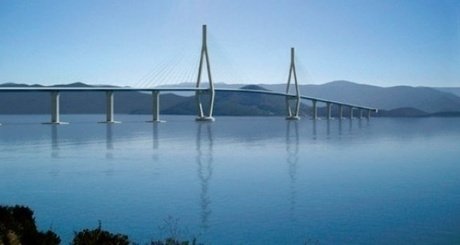
Do we really need ‘that Pelješac bridge’, as traffic expert Dr. Ivan Miloš told us, after the main political actors in the country unanimously said it was okay?
Although Dr. Ivo Bičanić did not agree with Miloš regarding the railway and the port of Rijeka, they do agree on the bridge. Bičanić somewhat ironically, but seemingly coherently and logically, comments on Croatia’s need to finance patriotic desires with foreign money (85 percent of the total investment is expected from EU funds). Because it is about inflated national pride, not some calculation on paper. Meanwhile, those in favor of building the bridge do not think at all about what to do with it when one day it is no longer in use, and all indications are that this will be the case.
Our politicians seem to have forgotten that BiH will one day be part of the EU, perhaps even much sooner than expected given the development of the political situation in the world and new American activity in that country. Bičanić believes that politicians and many in Croatia have asked the wrong question: How to territorially connect Croatia? And thus the idea of the Pelješac bridge was born because in that case neither tunnels, overpasses, nor various corridors make sense. However, that was the wrong question; the right one was how to get to the southernmost part of Croatia as quickly, safely, easily, and cheaply as possible. The answer presents itself: via the highway on the other side of the hill, i.e., through Popovo polje in BiH, with a fast access road. He envisioned the situation for about 15 years from now.
– You are in Cavtat and want to go to the world by car, bus, or truck. You have two routes available. You can choose the highway through Popovo polje and BiH or the Pelješac bridge. BiH has recently become a member of the EU and Schengen, so you do not have to stop at the borders. What do you choose? – asks Bičanić.
Instead of an answer, he offers a calculation and says: If we choose BiH, from Cavtat to the highway is 30 kilometers, or half an hour of driving. Then, via the highway through Popovo polje to the A1 highway in Čarapine is 100 kilometers (about one hour of driving, even shorter), which means we would drive to the ‘Croatian’ highway in less than an hour and a half.


