
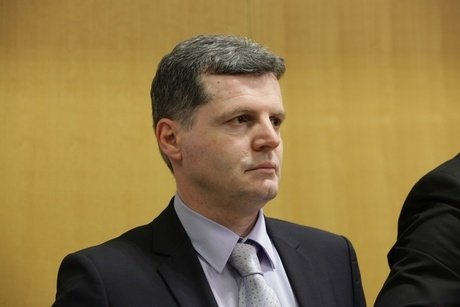
Health Minister Dario Nakić explained what his primary tasks are during his term at the head of the ministry he leads.
As reported by the media, Nakić announced that during his term he will try to increase revenues from supplementary and additional health insurance, resolve the debt problem of 2.5 billion kuna, return hospitals in recovery to their founders, determine which diagnostic procedures are mandatory and which will enter the above-standard that will require additional payment, change the model of contracting health care based on services rendered, reform public procurement, resolve the problem of the professional collective agreement for doctors, and enable the continuation of the emergency helicopter medical service project relying on its own resources.
The government has begun working on the budget for this year; will you manage to ensure that the total funds of 22 billion kuna for the health system are not reduced, and does HZZO remain an off-budget fund?
I certainly want that; I think it would be good for it to remain at last year’s level, but given that we are on the brink of excessive deficit, I think it will be difficult. I have contacted the Minister of Finance, and I believe that HZZO will remain outside the treasury, as that was a good move, but we will have to find a way to develop supplementary and additional insurance, which will primarily serve to increase revenues in basic insurance. We need to see what the possibilities are for using EU funds and health tourism, but it is difficult to expect that revenues can be increased at that level this year. Therefore, in response to the question of whether patient rights will change, I answer – yes, they will change, I hope for the better, because if we secure more money for the health system, we will be able to purchase new equipment, and with the increase in quality, we will provide better service.
The health budget has been suffering for years also because the state does not cover the costs of health care for retirees, the unemployed, etc., so last year only 2.4 billion of a total of 4.8 billion was paid. How to solve this problem?
That is a part we will have to discuss. We have nothing to discuss about contributions because they are collected from salaries, but our goal should be to finance the health system as little as possible from the State Treasury and to try to enable it to finance itself more or less with reduced expenses and increased revenues. For example, you have a drop in revenues from supplementary insurance, while at the same time there is an increase in private insurance companies dealing with supplementary insurance, so we need to work on HZZO’s revenues from supplementary insurance to avoid the situation where private insurers take the healthier population, leaving HZZO with the sicker one.
Will you change the current price of the supplementary insurance policy of 70 kuna, and what exactly do you mean when you say that services that fall under the above-standard will be charged?
The supplementary insurance policy will not be changed for now. Professional medical societies will determine through guidelines which diagnostic procedures are mandatory for each diagnosis and which fall under the above-standard and will need to be paid extra. This will also apply to certain orthopedic aids. For example, if someone wants to have a titanium hip implanted instead of a steel one during hip surgery, they will have to pay extra for that.
Usually, with the arrival of a new health minister, we always talk about inherited debts and “skeletons in the closet”; what did your predecessor leave you?
It is always customary for us that when you take office, you attack the one who was before you. I will not do that and will say that the former minister Siniša Varga warned me about several things upon my takeover. The health system had a deficit of 2.8 billion kuna after the recovery; last year it was reduced by about 300 million kuna and now amounts to about 2.5 billion kuna. This debt was created by stimulating consumption in healthcare through a new way of contracting and paying for services rendered. I will not blame anyone; we will see what the real situation is when all reports arrive at HZZO. I believe that our path is not a new recovery of the system because we will gain nothing from that, and all the holes from which it leaked will remain. We will have to work on reducing the debt to ensure that the health system is financially stable. The first measure where we plan to achieve savings will be the reform of emergency medical services. In the Unified Emergency Hospital Admissions (OHBP), about 50 percent of patients come without a referral, emergency patients whose lives are at risk wait for hours, and all this is an additional financial burden. We will have to find a way to financially disincentivize the arrival of such patients to OHBP because they should, above all, go to their family medicine doctor or to out-of-hospital emergency services. That is why I requested a report on the work of OHBP for December and January, to see what the average waiting time is and how long the longest wait was for admission.
You announced the return of hospitals in recovery to their founders – the counties; will you return them with newly created debts?
Hospitals have created a new debt of about 1.5 billion kuna after recovery. Undoubtedly, the counties will not agree to have hospitals returned to them with debts, as the state took them to settle debts. We will need to find a good way and talk to the founders about how to resolve this. Our goal will be to return those debts in the next period, and local government will take greater responsibility for the operations of those hospitals. The recovery was a bad project because new debts were created again. I regret that the public did not rise more strongly when the recovery managers were appointed without a competition, plan, and work program. This is unacceptable in a democratic world. Regarding appointments, I intend to go a step further. Until now, the directors of clinical institutions whose founder is the state were appointed by ministers, and I believe that this should remain only for one health institution, which will be a national institution for the implementation of the most complex forms of health care. I think that all other clinical institutions should be transferred under the jurisdiction of local government.
There are many such institutions in Zagreb; do you think the City would be interested in this given the enormous financial burden?
I think this needs to be discussed with the City. If we have one state, how many state institutions should there be in one state? One. And Sveti Duh is a clinical hospital and is owned by Zagreb, while KBC Sestre milosrdnice and KB Dubrava cannot. How is that? The system is not well set up.
Will you change the new model of contracting health care based on services rendered, thanks to which 20 hospitals ended last year in the black?
We will change it because, as I said, this model has only encouraged consumption. At the same time, we will not return exclusively to the limit model because that would again disincentivize people in the system, which is not good. Currently, we have 80 percent fixed financing and 20 percent variable, but I think we will reduce that part. Rockefeller once said that the demand for everything that is free is unlimited, but healthcare is not free. The goal is to reach a diagnosis and subsequent treatment with as few tests and additional procedures as possible, not to do everything, including unnecessary tests, just to bill more and thus get more money.


