
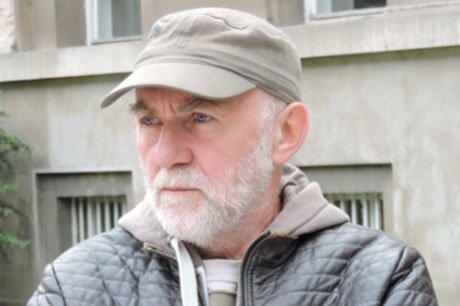
With dramatic warnings about the need for population growth in Croatia, many demographers have been trying for decades to draw political attention to the significant problem of population decline. One of them is demographer Dr. Stjepan Šterc from the Department of Geography at the Faculty of Science and Mathematics at the University of Zagreb, known for his direct and bold claims.
So far, the measures taken have not led to the desired outcomes, and with the announced establishment of the Ministry of Family, Immigration, and Demographic Renewal, it will have to wait until the new government restructures and reduces the number of ministries. Šterc points out that emigration should play a significant role in the economic and demographic renewal of Croatia, proposing that one of the measures should be the education of emigrant children at Croatian universities. In an interview with Lider, he emphasizes that we must finally move away from the politicization and vulgarization of demographic revitalization in Croatia, as this is not just a political or ideological issue. It is a matter, he warns, of the economic and overall future of Croatia and the survival of the Croatian people.
How can emigration help Croatia economically and demographically?
– Based on the intensity of emigration throughout the 20th century and the 15 years of this century, probable reproduction rates, birth rates, mortality rates, and overall fertility in new environments, as well as the retention of Croatian identity in some of its basic forms and general knowledge of demographic structures and trends in Croatia and other countries, it is possible to estimate the potential outside of Croatia at just over three million people. This amounts to over two-thirds of Croatia’s domestic population, and similar relationships exist among the fertile contingents of the population. According to World Bank data for 2014, remittances of about $1.6 billion were paid into Croatia’s financial system, and according to the same estimates, about 50% of that amount, or a total of $2.4 billion, entered Croatia in cash, which is about 14% of the annual budget. It is also estimated that among Croatian emigrants, there are over 900 established companies participating in the global market with their products and services, and individuals with scientific status more than in Croatia… Is this potential? Objectively significant, which domestic Croatia has not yet valued through any serious model for mutual interest through connecting people and activities, through social, scientific, and political life, exchange, and unity of domestic and emigrant Croatia… Nothing, even though it is logical and visible in all emigration countries that such connections are built on which economic, social, and every other rise is constructed, and in some countries, it is also a strategy for homeland security. Let us mention three countries as examples: Ireland, Israel, and Poland, and Russia is getting closer to this as well. Let us also note that neighboring countries formed by the breakup of the former community have annual remittance levels at an absolute level of over five billion dollars (Serbia and Bosnia and Herzegovina, thus double that of Croatia) and with an even larger share in the state budget and with lower absolute emigration. And we are still considering whether Croatian emigration should be included in the political life of Croatia, which is largely managed by minority groups with eight representatives. The fundamental problem of Croatia with Croatian emigration is that it is still predominantly considered political emigration in relation to the former state and political system, a competition to established structures retained from the former system that predominantly manage the economy, finances, and even political power. Such potential with idealistic views of Croatia is almost unimaginable to exclude from any developmental concept in countries with large emigration. We could say much more about the conscious distancing of emigration from privatization, about the lack of a national development strategy, about classic political diversion towards emigration, and the lack of courage in decision-making… Economic and demographic emigration does not have to help Croatia; it just needs to be included in the social and political life of domestic Croatia. With it will gradually come economic and demographic revitalization through an immigration model. This is not new, as Ireland has shown us the way.
You particularly rely on the examples of Ireland and Israel in your claims. Can you explain exactly what they did well, and what Croatia could apply in its case?
– First, we will mention Israel. Special precisely for its immigration model of revitalization through the immigration office directly under the government and above ministries, as part of their homeland security. This is a concept, a strategy, the basis of existence and development, conditioned by geopolitical relations in the region, and based on the wealth of the population outside the homeland and attachment to identity. We said that it is special and that it is not easy to establish such a model, concept, and strategy in different circumstances and in other countries, but it should be known as a possible framework and for possible aspirations. The advantage of the Croatian space compared to the Israeli one is in the more pronounced spatial potential that Croatia has.
The Republic of Ireland had almost the same number of inhabitants as Croatia 20 years ago, around 4.4 million. Today, Croatia has just under 4.2 million inhabitants, while Ireland has about 4.6 million with all positive demographic indicators, especially natural growth. Ireland’s rise began at that time based on developmental concepts of Ireland’s spatial potential and its characteristic activities and the community of emigrant and domestic Ireland through the development of new technologies, the introduction of innovations in economic activities, the use of experience, knowledge, and the overall potential of the Irish emigrant and domestic population. With the development of the economy, immigration to Ireland began, both foreigners and Irish, leading to overall demographic growth, natural growth, and more or less all positive demographic indicators. The total number of foreigners in Ireland is about 10%, with ethnic homogeneity the same as in Croatia. Ireland continues to encourage immigration and the return of Irish through developmental demographic incentive measures. Croats who have immigrated to Ireland receive, for example, child benefits for children who are not in Ireland. The concept of demographic revitalization in Ireland is not based on ideological, worldview, and similar issues, although there are some, but is complementary to economic development.


