
The economic environment for banks in Central and Eastern Europe (CEE) was positive in 2015, with most countries in the region recording strong economic growth, thanks to a high level of integration with the eurozone and solid macroeconomic fundamentals.
Banking sectors in most countries remained profitable, although the level of profit is normalizing to a different, lower level compared to the pre-crisis period, one of the conclusions of the latest study on the banking sector in the CEE region, conducted by UniCredit’s Strategic Analysis Department for that region, covering 13 countries. In the future, economic growth is expected to provide an additional boost to lending, and the shares of non-performing loans, which are currently at high levels in some countries, should decline, it was stated on Wednesday during the presentation of this study at the 21st Forum of Central and Eastern Europe organized by Euromoney in Vienna.
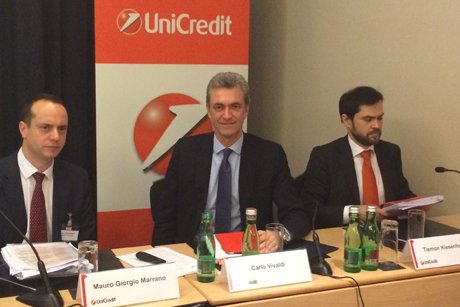
– Although the main characteristic of the region remains the differences between individual countries, certain positive trends have been recorded in the banking sectors of Central and Eastern Europe. In some countries, there has been an increase in lending, and banking sectors have generally remained profitable. In Central and Eastern Europe, a more sustainable financing model is becoming increasingly strong, where local deposits are becoming an increasingly important source of financing, said Carlo Vivaldi, UniCredit’s Director for Central and Eastern Europe.
Nevertheless, he emphasized, banks must pay close attention to the environment of low interest rates, regulatory pressures, movements in emerging markets, geopolitical tensions, and the consequences of migration.
Expected Acceleration of Lending Growth
Most countries in the CEE region recorded more dynamic growth rates in 2015 than in previous years, with GDP growth ranging from 0.6 percent in Serbia to 4.3 percent in the Czech Republic. The only exceptions are Russia, which had to deal with a sharp drop in oil prices and U.S. and European sanctions, and Ukraine, which faced the loss of significant production capacities in the eastern part of the country.
In addition, the new EU members from Central Europe proved to be more resilient to changes in investor sentiment towards emerging markets in the second half of 2015. Thus, EU-CEE countries benefited from such trends to record surpluses on the current account of the balance of payments or lower deficits, thanks to strong exports to the eurozone, low raw material and energy prices, and large surpluses on the capital account, which are mainly a result of inflows from EU funds. A more expansive monetary policy and stronger domestic demand provided an additional boost.


