
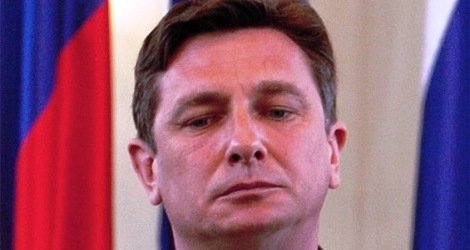
Slovenian Prime Minister Borut Pahor stated on Sunday in Brussels that he is pleased that the initiators of the referendum on Slovenia’s accession to NATO will not collect the required 40,000 signatures that would otherwise obligate the parliament to call such a referendum.
"Thus, we can expect that the constitutional right to collect signatures will be preserved, while at the same time there will not be enough to reach a referendum. Therefore, the ratification of the Croatian accession protocol, which was decided by three-quarters of the representatives in parliament, will come into force, and Croatia will be invited to the NATO summit in Strasbourg and Kehl," Pahor said on Sunday, as reported by Slovenian media.
The Slovenian Prime Minister said that he explained this situation regarding Croatia’s NATO membership to all his interlocutors with whom he met on Sunday at the EU summit in Brussels. Pahor stated that he also discussed the standstill in Croatia’s accession negotiations with the EU, warning them that the referendum initiated in Slovenia regarding Croatia’s NATO membership is possible in the case of ratification of the Croatian accession agreement with the European Union, for which a two-thirds majority in parliament will be required beforehand.
As is known, Slovenia has blocked Croatia’s negotiations with the EU, claiming that Croatia is trying to "prejudice the border" with Slovenia, a claim that Croatia has repeatedly rejected, maintaining that it is ready to declare that no document sent to the European Commission during the negotiations prejudices the border. Slovenia did not accept these guarantees and claims that Croatia must withdraw all alleged documents that prejudice the border.
Slovenian Prime Minister Borut Pahor rejected the claim that his policy towards Croatia has damaged Slovenia’s established reputation in the international community.
Slovenian Prime Minister Borut Pahor rejected the claim that his policy towards Croatia has damaged Slovenia’s established reputation in the international community and that due to the blockage of Croatia’s accession negotiations, the resolution of the border issue is "further away than ever." In response to the claims of former Prime Minister Janez Janša, who leads the strongest opposition party in the current parliament, Pahor said on Sunday, on the occasion of the first hundred days of his government, for commercial television POP-TV that the previous Janša government of the right center was the first to block the continuation of Croatia’s accession negotiations with the EU due to unresolved border issues and that he inherited that situation.
"The blockage of Croatia’s accession negotiations occurred during Janša’s government. Immediately at the beginning of my government’s term, we tried to find a diplomatic solution for that situation, and when it was not found, the blockage continued," Pahor said. Pahor also rejected Janša’s claims that he further radicalized the situation when he personally spoke with the marginal Slovenian People’s Party (SSN) and other "nationalist" groups, urging them to abandon the collection of signatures in support of the referendum that would prevent Croatia’s accession to NATO.



