
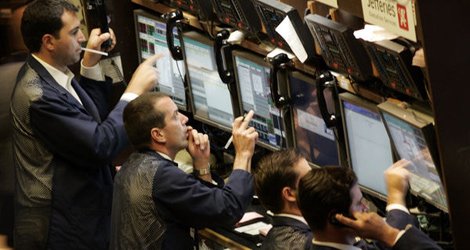
Most analysts at the Zagreb Stock Exchange today expect cautious trading as they await the announcement of anti-recession measures from the government, which could somewhat alleviate uncertainty in the stock market.
Of the 12 analysts from brokerage firms who participated in Hina’s survey, eight expect stagnation of the Crobex today, three expect an increase, and one expects a decline. The Crobex index rose slightly by 0.18 percent yesterday, to 1,405 points. Regular trading in shares slightly exceeded 17 million kuna. "With still low liquidity, I expect a continuation of price stagnation today. Most market participants are waiting for the announcement of anti-recession measures," says Zvonimir Marić, a member of the Management Board of K.D. Asset Management. The government is expected to present a package of anti-recession measures at today’s regular session, which will include some measures previously proposed by the Economic Institute, as well as some completely new measures that have not been mentioned so far.
Among the known measures is saving in state-owned companies through the reduction of intangible costs and investments, which could save about 1.5 billion kuna. The government has also announced that several state companies, including HEP, Hrvatske autoceste, and Hrvatske ceste, will receive additional loans to settle current obligations to suppliers, thereby reducing illiquidity in domestic construction companies. "These measures could have a very favorable impact on the Croatian economy, largely depending on the consumption and investments of the state and state-owned companies," emphasizes Marić. Media speculation suggests that one of the measures could also be the introduction of excise duties on telephone impulses.
"Telephone consumption is quite inelastic, so if any excise duties are not too high, it should not overly affect the revenues of telecommunications companies. The shares of these companies are considered defensive, as their revenues are not significantly affected during a recession," assesses Marić. He adds that confidence in the domestic market, just like on foreign exchanges, is very low. "At this moment, few want to invest in funds and shares. Namely, no one can yet assess the extent of this recession and how effective the measures taken by governments around the world will be. All this increases uncertainty, which is much more negative for the stock markets than bad news, as it cannot be factored into stock prices," emphasizes Marić.



