
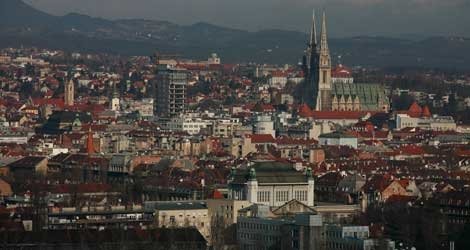
The most developed Croatian counties are also the most competitive, with the City of Zagreb leading the ranking of the most competitive counties, followed by Zagreb County in fifth place, while the least competitive are Lika-Senj, Požega-Slavonia, and Vukovar-Srijem counties.
This was highlighted by Slavica Singer, a professor at the Faculty of Economics in Osijek and a member of the National Council for Competitiveness (NVK), while presenting the research "Regional Competitiveness Index of Croatia 2007" at the meeting of the Economic Council of the Croatian Chamber of Economy (HGK) – Zagreb Chamber. The research was conducted at the initiative of the NVK, the United Nations Development Programme (UNDP), and the Croatian Chamber of Economy (HGK). She emphasized that, in addition to the leading position, five out of six counties in Northwestern Croatia are among the top seven, with only Krapina-Zagorje County outside this elite group, ranking at 15th place.
Singer finds it interesting that although Krapina-Zagorje County is close to Zagreb, it has the biggest problem with the level of education, meaning that the education factor does not contribute to its competitiveness. Therefore, Northwestern Croatia needs to consider balancing competitive capacity in regional development policy and how to enable better utilization of existing business environment factors to strengthen competitiveness within the region. Speaking about the advantages and disadvantages of competitiveness in the City of Zagreb, Singer highlighted demographics, health and culture, the quality of business schools, basic infrastructure, and the development of entrepreneurship as advantages.



