
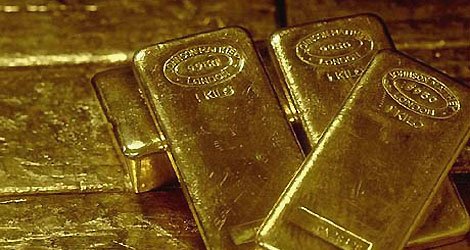
Increasing uncertainty in global financial markets is prompting many investors to seek refuge in gold to protect themselves from a potential financial Armageddon.
There are still no signs that the worst global economic crisis since the 1930s is nearing its bottom, so investors continue to invest their money in gold and gold-backed securities, avoiding even investments in government bonds as their concerns grow regarding the ability of governments, not just commercial banks, to repay their debts. However, as with most insurance policies, investors hope that this will not pay off."Gold is an investment you hope you never make money on. Because if you make money, it means all other markets are losing," emphasizes Stephen White, director of the advisory firm Noah’s Rule. He points out, however, that cash is king, but gold is cash in all currencies.
"In the short term, gold will continue to strengthen, but once stability returns, be prepared for a rapid decline in its price," White warns. The price of an ounce of gold is currently around $1,000, quickly approaching the record level of $1,030 reached last year. At the same time, the volume of gold trading is increasing. Last year, SPDR Gold Trust, the world’s largest gold investment fund, averaged trading 13.8 million ounces daily, double the amount in 2007. And since the beginning of this year, the volume has been even higher – 19.7 million ounces daily. The rise in gold prices is driven by two forces, both of which could spell disaster for other, more conventional investments. The first is the risk that the dollar may collapse due to future inflationary pressures from the massive influx of money into the U.S. economy.
The second risk is the inability of Eurozone members to repay their debts, as the European Central Bank has a much stricter stance on monetary policy. There is increasing debate among analysts about two ideologies – one represented by the stance of Fed Chairman Ben Bernanke, who has earned the nickname "Helicopter Ben" for suggesting that money could be dropped from helicopters to revive a faltering economy. The other is represented by European Central Bank President Jean-Claude Trichet, who repeats the mantra of caution."There is a man with a helicopter full of money on his way to undermine the foundations of the currency versus one who cannot press the button to print money due to the risk of defaulting on government debts and the collapse associated with it. An interesting aspect is that gold is now seen as a hedge against inflation in the dollar world and against deflation in the euro world," explains Alan Ruskin, an analyst at RBS.



