
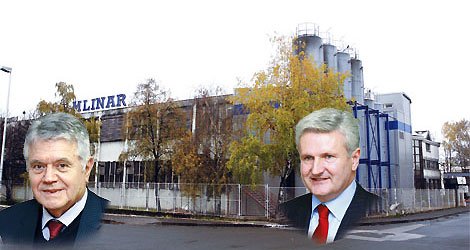
Foreigners are attacking entire sectors, while domestic players remain only in niches. The opening of the domestic market to the European Union will disrupt existing market relations.
The new issue of Lider brings an exclusive interview with Ante Marković, the man who, twenty years ago, used the term ‘new socialism’ while presenting his program for exiting the crisis to the then Yugoslav political elite. Today, at the age of 85, he says that capitalism must change in this crisis. Does this mean that he advocates for a new capitalism today?
It is increasingly likely that the Government is already quite ready to call the IMF. Of course, they will not recommend anything that Croatian economists have not already suggested, but it is easier to point the finger of blame at someone else than to face voters, who truly have the power they deserve. Is the Government’s rejection of the anti-recession measures of the Economic Council merely a performance for the curtain that will rise for the IMF, as Gordana Gelenčer reveals?
T-HT, with its profitability and cash flow strength, can easily finance an investment in ‘optics’, and what better moment to deliver a key blow to the competition than when it is already on its knees? More in the text by Matilda Bačelić and Igor Škevin ‘One Billion Euros for One Million Optical Connections’.
This week’s theme deals with the analysis of the attacking sector. Namely, foreigners are attacking entire sectors, while domestic players remain only in niches. The opening of the domestic market to the European Union will disrupt existing market relations. Meanwhile, the fear of entrepreneurs regarding the entry of ‘foreigners’ is alleviated by the fact that they will also gain more space to market their products in other EU member states. However, foreign players, especially large multinational companies, could seriously disrupt the positions of Croatian leaders, who seem to be safe from the onslaught of new competition due to their market share. This security is logical considering that once they occupy a position, duopolists and oligopolists can reap the fruits of their labor, confident that the entry of new players will be more difficult than in a free market.



