
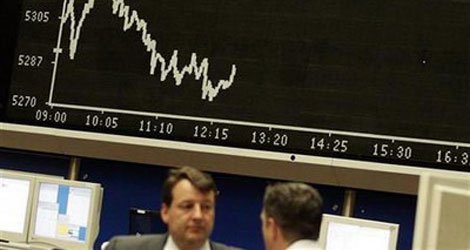
Investor hope that the U.S. government’s plans to stimulate the economy and rescue banks will contain the recession and normalize lending in the U.S. spurred a strong rise in stock prices on global exchanges last week.
On Wall Street, the Dow Jones index rose by 3.5 percent to 8,280 points. The S&P 500 index jumped by 5.2 percent to 868 points, while the Nasdaq index gained 7.8 percent, reaching 1,591 points. Throughout last week, discussions were ongoing in the U.S. Senate regarding the government’s proposed economic stimulus measures, which had been approved by the House of Representatives a week earlier. On Friday, it was finally announced that a preliminary agreement had been reached in the Senate between the majority Democrats and some opposition Republicans, which should allow for the acceptance of the economic stimulus package.
Representatives from both parties still need to agree on the details of how to reduce the proposed measures’ value from $937 billion, which had ballooned due to numerous amendments, to $780 billion, as requested by the Republicans. This will be discussed over the weekend, and the Senate is expected to vote on the bill early next week. Investors were also encouraged by the announcement that on Monday, Treasury Secretary Timothy Geithner would present a new plan for bank rescue, which should clean up bank balance sheets and stimulate lending to individuals and companies. It is speculated that the plan will include assistance to regional banks, as well as changes to accounting rules that could lead to a reduction in write-offs of bad debts by banks. As a result, the financial sector on Wall Street sharply recovered after being under significant pressure for several days.
Just on Friday, the KBW bank sector index jumped nearly 12 percent, and the S&P financial index rose more than 8 percent. Notably, the stock price of Bank of America surged by more than 25 percent, which had fallen to its lowest level since 1984 during the week due to investor fears that the largest U.S. bank would be nationalized. The recovery of that stock price followed after the CEO of BofA called the nationalization speculation unfounded and stated that the bank no longer needed government assistance.



