
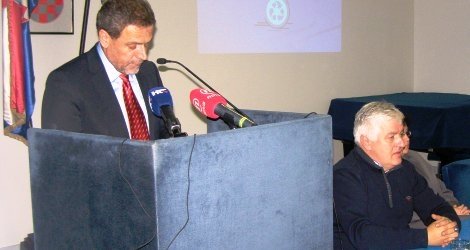
The City of Zagreb is prepared for the global economic crisis and recession as the city’s social policy has been designed flexibly. This was stated on Tuesday by Zvonimir Šostar, the head of the City Office for Health, Work, Social Welfare, and Veterans.
Šostar made this statement while presenting the social policy of the City of Zagreb for the period from 2009 to 2012, valued at approximately 2.3 billion kuna for users of social programs in the City of Zagreb. Head Šostar emphasized that the City of Zagreb currently covers housing costs for one thousand five hundred Zagreb families, and 1,026 of them heated their homes this winter with firewood provided by the City. Financial assistance is provided to pensioners, with those living alone receiving 200 kuna per month, and those living with their families receiving 150 kuna.
The City has also taken care of the education of young people from families with lower socio-economic status and young people with disabilities, providing 10 student scholarships and 12 university scholarships in the 2008/2009 academic year.
By building new homes for the elderly and infirm, one thousand new beds will be created.
As for plans, the City will build a home for the full-time care of 50 elderly and infirm individuals, and there are currently as many as 100 potential users. By building new homes for the elderly and infirm, one thousand new beds will be created, and 900 apartments will be allocated to the most socially vulnerable families.



