
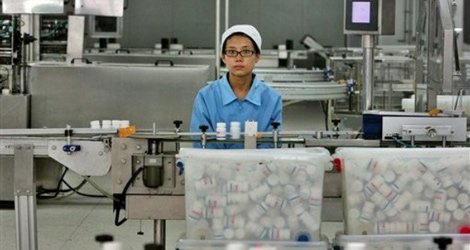
The latest trend is a decline in China’s trade surplus as the price of oil, one of China’s most important imports, recovers while demand for their strong exports, such as consumer electronics and textiles, continues to weaken.
Written by: Vanja Figenwald
[email protected]
China, the fairy tale of rapid and incredible success, the transformation from an ugly duckling to a swan, has been experiencing quite an unpleasant ride in recent months, just like the rest of the world. Exports recorded a decline of 11.4 percent last year for the first time in seven years, with a 2.2 percent drop in December compared to December of the previous year. In Sichuan, Guangdong, and other super-propulsive provinces, factories are closing at the same speed they were opened, and workers are preemptively resigning to at least collect what they have earned so far before their companies go bankrupt. As with everything in China, this involves millions.
The crisis reached China very quickly. A large part of China’s supply is directed towards American demand, a mistake that should have been considered earlier, resulting in excess production capacity across continental China. The disaster at cash registers in America during the peak Christmas holidays confirmed the durability of the trend beyond any doubt. Payment delays, once between 30 and 45 days, have now jumped to 90 or even 120 days, leading many Chinese manufacturers, who already operate on thin margins, to bankruptcy. A particularly cruel joke is the increasingly frequent demand from those same distributors and retailers for manufacturers to show balanced accounts and prove that they will not go bankrupt before delivering the agreed goods. They, in turn, do not believe that they will be able to pay for the goods, while banks are increasingly refusing to guarantee payment for the requested orders. Everyone is pulling back.
Trade headaches for Obama
Some analysts in China predict a far greater number of bankruptcies in the coming months. Illiquidity, an old Croatian acquaintance, has been ravaging the world in recent months. In an attempt to prevent further disintegration of all sectors, the Chinese government has taken a series of measures, two of which are particularly interesting given the range of repercussions. The first is assistance to sectors based on cheap labor (labor-intensive industry), primarily concerning the textile industry, a thorn in the side of the West whose textile industry is seriously threatened by cheap imports from China. At the end of last month, China’s Minister of Industry and Information Technology, Li Yizhong, stated that ‘China will resort to customs and trade policies to enable the export of industries based on cheap labor as well as those based on technology.’ This means possible trade headaches for Barack Obama, who already has a full plate. A dispute already exists in the World Trade Organization where America has legally challenged Chinese assistance to the controversial industry.
Recovery measures
• China plans new customs and trade regulations that will enable the export of industries based on cheap labor and those based on technology
ª A stimulus of 600 billion dollars for production is planned
• Regulatory bodies have ordered banks to start lending more money to small and medium-sized enterprises and local governments for infrastructure projects
• Money is being hoarded in the domestic market and there is a significant reduction in the purchase of U.S. Treasury bonds.
The second measure, which could hurt Americans far more seriously, is turning to its own market, that is, hoarding money in the domestic market and stopping the purchase of U.S. Treasury bonds. So far, China has purchased nearly 1 trillion dollars of U.S. debt, an amount that Americans intend to spend for their recovery, but as problems deepen, the Chinese no longer intend to finance America easily, which could prove particularly disastrous at a time when they are preparing to borrow even more for emergency recovery.
Chinese protectionism
Obama’s plan, entirely based on a huge fiscal deficit, largely relies on one of the most loyal buyers of federal bonds who is becoming grumpy. Over the past five years, China has spent one-seventh of its total economic output on purchasing foreign debts, mostly American, surpassing Japan in September as the top holder of foreign bonds. However, times are changing and everyone is on their own, so China is turning to its 600 billion dollar fiscal stimulus that needs to be financed. Regulatory bodies have ordered banks to start lending more money to small and medium-sized enterprises and local governments for infrastructure projects. Nice when it can be done, but for that, one must first own their banks.
The problem is all the greater as China’s previous appetite for U.S. debt has influenced low interest rates, which will no longer be the case if the Chinese suddenly decide to stop buying U.S. bonds. Three trends are particularly responsible for the dollar shortage in China, which then means less purchasing of their debt. First, foreign direct investment has begun to decline sharply, by a third since summer, as multinational companies increasingly hoard their money.
Foreign investors are pulling out money
The second problem is the increasingly frequent quiet withdrawal of money from China, led by foreign investors, but domestic businessmen are beginning to join them. The latest trend is a decline in the trade surplus, which, however, recorded a new record in November, 40 billion dollars, but a significant decline is expected as the price of oil, one of China’s most important imports, recovers, while demand for their strong exports, such as consumer electronics, continues to weaken. This means less money to play in international markets, particularly the American one, where they were injecting about 50 billion dollars monthly in the early months of last year. However, speculations also involve an important political factor that takes into account the need to finance America and keep their economy on its feet, precisely because of the aforementioned consumption, so it is expected that part of the foreign exchange reserves denominated in dollars will feel a somewhat softer treatment than other currencies. Additionally, China must buy dollars to keep its currency, the yuan, low, thereby stimulating exports. Considering all this, a complete cessation of purchasing U.S. bonds is unlikely, but a decline is certain.



