
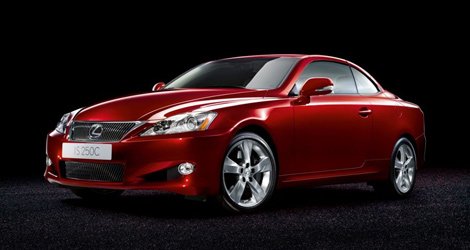
When Lexus was introduced at the North American International Auto Show in Detroit in 1989, the only question was whether this luxury brand of Japan’s Toyota could compete in the American luxury model market. Today, 20 years later, Lexus has proven that not only can it compete, but it can lead an entire segment.
The pursuit of perfection began in the early 1980s when then-president Eiji Toyoda challenged a group of engineers to develop the best luxury car in the world. After hundreds of prototypes and thousands of test miles, the LS400 was born. Customers flocked to 80 carefully selected Lexus dealerships across the U.S., reading articles like the one published in the prestigious Automobile Magazine, which stated about the LS400, “this model has reached a level of perfection, the highest we have ever been able to achieve.” Car and Driver wrote, “Lexus literally and figuratively drives you into another dimension.” Motor Trend stated, “we are honestly amazed that the LS400 is so perfect.” However, soon the first problems arose. Shortly after its introduction, two minor issues were discovered with the LS400 model. Several individuals complained that the third high-mounted stop light was not as bright as it should be, and one customer reported a cruise control malfunction. Lexus faced a challenge. It recalled all eight thousand sold vehicles from their owners, inspected them, and if necessary, resolved the issue, returning all cars to their owners cleaned with a full tank of gas. Owners also received a gift as a thank you for their understanding. Instead of halting this young brand, this precedent in customer service set a new level of service for owners, which further elevated the brand. This legendary Lexus move towards complete owner satisfaction and the desire for the highest quality is still mentioned as an ‘example’ at numerous world economic universities.
Toyota Surpasses Mercedes
By 1991, 141 Lexus dealerships had opened across the U.S., and Lexus surpassed Mercedes-Benz and BMW in sales, becoming the best-selling luxury imported brand in the U.S. In the early 1990s, Lexus continued to refine its market name and products, as evidenced by the highest awards for quality and customer satisfaction from J.D. Power and Associates. In March 1993, Lexus introduced the GS300 luxury sports sedan. In 1995, Lexus faced new challenges. The economy weakened, the Yen fluctuated against the dollar, and Lexus spent months in uncertainty as the U.S. and Japanese governments negotiated proposed 100 percent tariffs on Japanese luxury cars. The tariffs were not implemented, and the overall luxury market continued to grow. In 2000, Lexus became the best-selling luxury brand in the U.S., holding that title for nine consecutive years!!! At the beginning of its second decade, Lexus began to turn away from its traditional segment to introduce vehicles for people who may not have previously considered a Lexus. For them, in July 2000, Lexus developed a second model in the category of smaller luxury sedans, the IS300 sports sedan. The following year, Lexus upgraded its classic SC model and transformed it into a hardtop convertible. With a wide range of sedans, luxury SUV models, and hardtop convertibles, Lexus offers products in nearly every luxury segment worldwide. It was time to start demonstrating Lexus’s passion and aspirations for innovation.



