
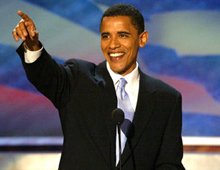
The elected American president Barack Obama will take the oath on Tuesday and become the 44th president of the United States. The first African American in this position will follow the tradition of his predecessors and take the oath over the Bible, and despite the crisis, will hold an inaugural ball.
Obama will take the oath over the Bible that belonged to Abraham Lincoln, and the inaugural theme is named "A New Birth of Freedom," paying tribute to the 200th anniversary of Lincoln’s birth. Those words, spoken by Lincoln at Gettysburg, express his hope that the sacrifice of those who perish to preserve the United States will allow for a "new birth of freedom" for the nation. Lincoln’s speech at Gettysburg is considered one of the most quoted speeches in American history, and in fact, it was very short – it contained only 10 sentences and 272 words. The inaugurations of the previous 43 American presidents are events that have not only been recorded in American history for their lavish ceremonies but also for unusual or tragic consequences, such as the deadly pneumonia that William H. Harrison paid for with his overly long inaugural speech in icy weather 170 years ago. To date, there have been 54 official presidential inaugural ceremonies held at 10 different locations in American history. Since George Washington in 1789, every president has delivered an inaugural address. The shortest inaugural address, which contained only 135 words, was delivered by George Washington in 1793 in Philadelphia, while the longest speech was given by William H. Harrison in 1841. His inauguration was one of the most tragic in American history. Despite a snowstorm and terrible cold, 68-year-old Harrison read his speech for a full two hours, after which he contracted pneumonia and died a month later. His vice president John Tyler took the oath in a hotel and did not deliver an inaugural address.



