
Italy and Albania have signed a two billion euro agreement for the construction of energy projects to supply the Italian energy market.
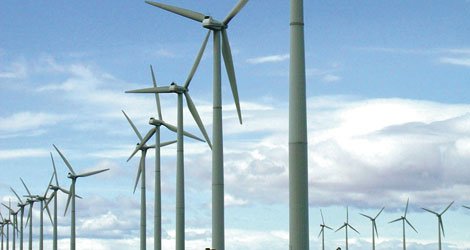
The agreement includes the construction of a submarine gas pipeline between the two countries, a gas evaporation plant, and a wind farm complex with a total capacity of 500 MW, which is expected to be the largest onshore wind power generation complex in Europe. In this way, it is assessed that Italy’s chronic energy deficit and internal obstacles to the construction of a new wind farm will make Albania a very good option as a source of electricity for Italian consumers. Electricity in this option would be generated from 250 wind turbines and transmitted to Italy, built by the Italian company Moncada. Additionally, the ambition of the current Albanian government to make the country one of the regional energy hubs has opened up a new potential market for some Italian producers.
However, the wind farm is also the most controversial project of this energy package. In addition to 250 wind turbines, it includes submarine transmission lines from the port of Vlora to Brindisi in Italy, spanning 145 kilometers at a depth of 900 meters, with construction expected to begin in 2010. The project has faced significant opposition from ecologists and environmental protectors not only in Albania due to its controversial location. Their outrage is triggered by the fact that the wind farm will be located on the Karaburun Peninsula, in the protected area of Llogara, one of the last untouched natural areas in Europe. ‘Karaburun is a mythical place, a picture of what the Mediterranean once was, one of the most important natural reserves in the Mediterranean and a precious potential for tourism development,’ said Genuario Belmonte, a professor of marine biology at the University of Salento in Southern Italy, regarding the project.



