Home / Media and Publications / Measures Against Recession Last Week Stimulated Growth of Global Stock Markets

Measures Against Recession Last Week Stimulated Growth of Global Stock Markets

Stock prices on global markets rose sharply last week thanks to new measures by the financial authorities of the world’s most developed countries to mitigate the recession.

On Wall Street, the Dow Jones index rose by 9.7 percent last week to 8,829 points, while the Nasdaq index gained 10.9 percent, reaching 1,535 points. The S&P index jumped 12 percent to 896 points. The Dow Jones and S&P indices rose for five consecutive days, achieving the largest five-day jump since the Great Depression of the 1930s.

The rise in stock prices is primarily attributed to new programs from the U.S. central bank and the Treasury Department, worth a total of $800 billion, under which, among other things, debts and securities related to mortgages will be purchased, with the ultimate goal of normalizing lending to citizens.

"This action was taken to reduce costs and increase the availability of loans for home purchases, which will support the housing market and generally improve conditions in the financial market," the Fed stated. This has encouraged investors, as all recent moves by the Fed and the Treasury Department, including the bailout of Citigroup, show that the government is doing everything it can in the fight against recession.

‘In recent days it has become quite clear that the Fed and the Treasury have dug deep into their wallets, making it less likely that financial institutions will fall into new problems.’

"In recent days, it has become quite clear that the Fed and the Treasury have dug deep into their wallets, making it less likely that financial institutions will fall into new problems. Additionally, it is increasingly likely that the authorities will also assist the automotive industry," says Hugh Johnson, a strategist at Johnson Illington Advisors. As a result, the price of General Motors stock jumped more than 35 percent in just one day, and shares of other automakers also increased.


Investor sentiment was positively influenced by the European Commission’s proposal for a package of measures to mitigate the recession in the European Union, which includes a reduction in VAT and other taxes, a decrease in interest rates, and an increase in social spending, all aimed at stimulating consumption and thus economic growth. The European Commission’s package of measures is worth approximately 300 billion euros.

The consumption rate of the American population recorded the largest decline in 28 years.

Completely overshadowed by this good news were new data indicating a weakening U.S. economy. Revised data showed that the U.S. gross domestic product fell by 0.5 percent in the third quarter, rather than the initially reported 0.3 percent. Meanwhile, the consumption rate of the population recorded the largest decline in 28 years, indicating a significant weakening of the economy. The decline in consumption is currently one of the biggest concerns for investors on Wall Street as the pre-holiday shopping season began last Friday and will last until Christmas. Numerous surveys indicate that Americans will spend less on Christmas gifts this year than in previous years, leading analysts to believe that this year’s pre-holiday spending could be one of the weakest in several decades. This weekend will represent a crucial test to show whether Americans, in fear of recession and unemployment, have indeed decided to spend less for this year’s holidays, analysts say.

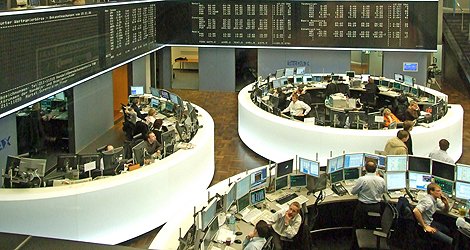
Good sentiment also prevailed last week on European stock markets. The London FTSE index jumped by 13.4 percent to 4,288 points, while the DAX, the Frankfurt Stock Exchange index, rose by 13.1 percent to 4,669 points. On the Tokyo Stock Exchange, the Nikkei index rose by 7.6 percent last week to 8,512 points. (Hina)

