
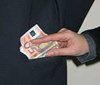
USKOK’s informant in the “Maestro” case, Joško Kuzmanić, testified today at the Zagreb County Court that the former vice president of the Croatian Privatization Fund (HFP), the first defendant Josip Matanović, requested one and a half million euros to favor Russian investors in the construction of luxury apartments on the site of a former brick factory in Nin.
"Matanović clearly indicated that he was in a position to ensure a positive outcome and therefore requested money," said Kuzmanić. In contact with Matanović, whom he has known since university, Kuzmanić came in April last year as a lobbyist for Russian investors who planned to invest 30 million euros in the construction of apartments in Nin."When it became clear that the project could not move forward without money, I went to USKOK, took an envelope with money, and handed it to Matanović in the Anera café," said the witness. There is also a video recording of the handover of the first 50 thousand "USKOK" euros, and Kuzmanić was also wired in later meetings with people from the Fund.
After handing over the first "envelope," Kuzmanić, with the mediation of the accused lawyer Juraj Parazajder, drafted a deposit agreement with a notary. For this reason, he took another 150 thousand euros from USKOK and handed it to Parazajder as a guarantee that Matanović would receive 1.5 million euros upon completion of the job, or five percent of the total value of the investment in Nin. The witness stated that Matanović planned to open an account in Austria, but the final payment did not occur due to the arrest.
USKOK’s informant claims that Matanović also requested an additional 200 thousand euros for his colleague Robert Peša, also a vice president of HFP responsible for real estate. His role was to resolve the issue of traffic documentation with the mayor of Nin. "We were forced to agree to this because otherwise the project would be brought to a standstill," said the witness. The same "modus operandi" was applied in the planned purchase of hotels in Podgora and Živogošće, for which Russian investors planned to allocate up to 90 million euros.



