
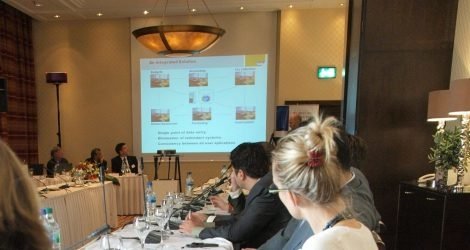
At the 1st Croatian conference SAP for public sector ‘Vision of Efficient Integration of Public Administration – Ready for the EU!’, the company brought three of its leading experts in public administration transformation who presented the best global practices in this area.
The conference, held on Monday at the Regent Esplanade hotel in Zagreb, began with a small incident. Namely, the moderator of the conference, young SAP employee Tomislav Sokolić, fainted from excitement, and the first doctor to rush to his aid was Dragan Schwarz, State Secretary from the Ministry of Science, Education and športa.
– Interesting times are ahead of us, a crisis is coming to Croatia and we are in a situation where it is not easy to obtain funds in the public sector, so projects with a payback period of three to five years will take precedence. While the public sector is thinking about how to achieve significant savings in the future, I hope we will open topics and draw conclusions that will help it in that direction. We are opening topics and issues that will become increasingly significant for us in the future – said Igor Dropulić, director of SAP in Croatia, at the opening of the 1st Croatian conference SAP for public sector ‘Vision of Efficient Integration of Public Administration – Ready for the EU!’.
Sönke Lorenz, Chargé d’Affaires of the Embassy of the Federal Republic of Germany, stated that there are still several gaps on Croatia’s path to the EU, including public administration reform.
After Dropulić, Sönke Lorenz addressed the attendees, stating that from 1993 to 2008, Germany invested 2.3 billion euros in Croatia, making Germany the second largest foreign investor after Italy. On the path to the EU, Lorenz said, there are still several gaps, including public administration reform. Although he praised the progress in negotiations and reforms, he emphasized a significant lag in decentralization, which in his interpretation means that Croatia must make significant progress in public administration reform by the end of next year, with the use of new technologies being crucial to boost economic growth and gain the trust of citizens and the business community in Croatian authorities.
The conference was then addressed by leading SAP experts in the public sector: Shanti Namballa from SAP International’s Washington D.C. office for new market development, Roland Stapf, also responsible for new market development, and Martin Brown, director of the Public Services Department in SAP’s Europe, Middle East, and Africa sector.



