
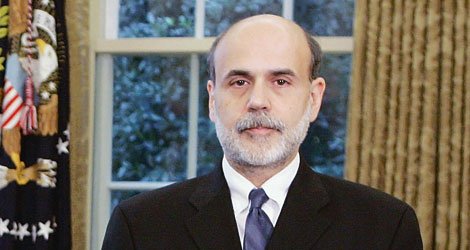
U.S. Treasury Secretary Henry Paulson and Federal Reserve Chairman Ben Bernanke testified before Congress on Tuesday, stating that the $700 billion financial sector bailout program is showing progress despite increasing criticism in recent weeks.
Testifying before the House Financial Services Committee, Paulson and Bernanke said they have tried to respond as appropriately as possible in a rapidly changing deep crisis affecting the entire global financial system. “I am very proud of the decisive actions taken by the Treasury, the Fed, and the Federal Deposit Insurance Corporation (FDIC) to stabilize our financial system. We did what was necessary as the facts and conditions in the market and the economy changed,” Paulson said.
The financial leaders of the administration faced the greatest criticism for last week’s decision to change the main method of the bailout program, shifting from purchasing illiquid mortgage securities from bank balance sheets to buying equity stakes in banks. When Paulson and Bernanke first explained the program to lawmakers in September, they emphasized that it was imperative for the government to relieve banks of bad assets. Many representatives on Capitol Hill expressed dissatisfaction with the abandonment of that plan.
Just a few days after Congress approved the bailout legislation, the Treasury Department announced a plan to invest $250 billion directly into financial institutions, buying their shares to help unfreeze the credit market. Half of that amount was allocated to the nine largest banks, including Citigroup, JPMorgan Chase, Goldman Sachs, and Bank of America. An additional $33.56 billion was invested in another 21 banks, bringing the total to $158.56 billion, the Treasury announced on Monday.



