
The financial crisis has not only swept through the market of large investment banks and ‘cut down’ chances for greater economic growth, but it has also caused unusual and deep changes in the relationships of world currencies.
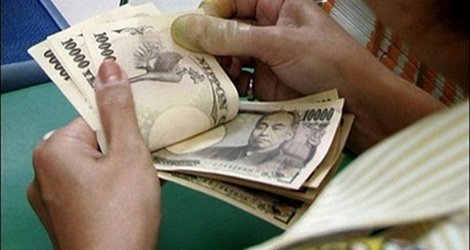
Alongside the unexpected recovery of the dollar, the increasingly strong Swiss franc, and the domestic kuna, the Japanese yen has strengthened by as much as 40 percent in the last month. Currently, around 97 yen is needed for a dollar, but analysts would not be surprised if the yen strengthens to a level of 95 or even 90 yen per dollar. Just last summer, this currency was trading at a level of 170 yen per euro, only to reach a low of just 112 yen at one point earlier this month. Mario Tomljanović from Admiral Investments states that it is evident that a strong and very rapid decline of the euro against the yen has begun, which could result in breaking the current minimum. Thus, the euro could weaken further, but after reaching the presumed minimum (potentially around 106.30 yen per euro), a correction upwards will begin.
Although the Japanese economy had already fallen into stagnation before the outbreak of the crisis, the strengthening of the yen shows that the relationships of world currencies are forming independently of the state of the real economy. Hrvoje Stojić, an analyst at Hypo Bank, draws a comparison with the Swiss franc, noting that both the ‘Swiss’ and the yen have been currencies of cheap financing. For years, the Japanese have invested in foreign bonds, which has resulted in a surplus in their balance of payments. If they want to withdraw that surplus, they must convert the foreign currency in which the purchased bonds are denominated into yen – greater demand for it raises its value. Stojić believes that perhaps a larger reason for its strengthening is the decreasing interest rate spread between the dollar and the yen. To stimulate economic growth, the FED will likely cut interest rates, possibly to 0.5 percent, thus approaching interest rates in Japan. As that interest differential has melted away, so too has the play with ‘carry trade’, concludes Stojić.
Has the yen jeopardized Japanese exports?
The strengthening of the Japanese yen could, according to information from the auto industry, harm Japanese exports. The Japanese automobile and motorcycle manufacturer Honda announced that due to the strong increase in the value of the yen in 2009, it will have to raise motorcycle prices in accordance with the rise of the yen. This would mean that motorcycle prices could rise by as much as 40 percent. Honda believes that the Japanese currency will remain at high levels in the first half of 2009. Therefore, they announced higher prices for motorcycles; Honda CBR 1000 RR, Honda CBR 600 RR, Honda VFR 800, Honda Shadow 750, Honda Silver Wing 600, Honda Forza 250, Honda DN 01, Honda CB 1300, all of which are produced in Japan. Besides Honda, all major Japanese automobile manufacturers, Mitsubishi, Toyota, Mazda, and Nissan, operate in the Croatian market. At Japan Motors, the general importer of Mitsubishi for Croatia, they say that the ratio of yen to euro is far more important than that of kuna to yen, as they pay for cars in euros. They order them from the European headquarters located in the Netherlands, from which they have not yet received any announcements about price increases.



