Home / Media and Publications / Pahor announced the possibility of state intervention in Mercator

Pahor announced the possibility of state intervention in Mercator

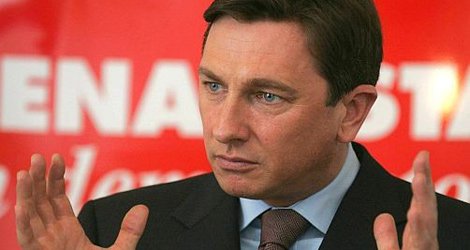
Future Slovenian Prime Minister Borut Pahor announced state intervention in the process of selling 48 percent of shares in “Mercator”, stating that the possible transfer of the largest Slovenian company and retail chain to foreigners would have consequences for the domestic food processing industry.

"The new government has several options, and it will discuss this with the opposition," Pahor stated late Monday evening on the show "Odmevi" on Slovenian television. Pahor did not specify which measures were being considered, but clarified that it would be a "precedent" that the new government would use due to the impending economic crisis, rather than introducing state interventionism in the capital market.

Pivovarna Laško (PL) and the circle around its director Boško Šrot recently announced that they would offer 48 percent of Mercator’s shares in an international tender. In this context, Šrot stated that they were forced to take such a step due to the "terror" of state regulatory agencies. The Securities Market Agency and the competition market regulator are conducting proceedings against PL and Šrot, proving that he, contrary to the takeover law, increased his ownership stake to a share package that fully controls the largest domestic trading company, and they are seeking to reduce his ownership stake to a quarter of Mercator’s shares.


Current Slovenian Prime Minister Janez Janša stated on Slovenian television, where he discussed the "Mercator case" together with Pahor, that he considers the announced state intervention unjustified and that the initiated proceedings against Šrot and PL should continue. Janša assessed that Šrot’s threat to sell Mercator’s shares to foreigners is merely a bluff, or "political pressure", aimed at getting the state to assist him and buy part of the shares that he acquired outside legal rules.

Pivovarna Laško acquired the largest share package in Mercator in 2005, purchasing them with the approval of the current government from quasi-state funds. In the meantime, a large portion of those shares came under Šrot’s control within the framework of managerial privatization and with large loans from Slovenian banks, where the mortgage for the loan was the then value of the shares on the stock exchange.

Slovenian media report that the problem with this model of privatization, which has been expanding over the last three years, is that a financial crisis has since occurred. Due to the crisis, interest rates on loans taken have increased by a third, and the value of shares, or pledged mortgages, has decreased, so many who entered such privatization models are now expecting state assistance.(H)

