
Croatian hotels need to improve and enhance their offerings in order to compete on a global level, and particularly, marketing Croatia as a destination within Europe is essential.
Interviewed by: Vanja Figenwald
[email protected]
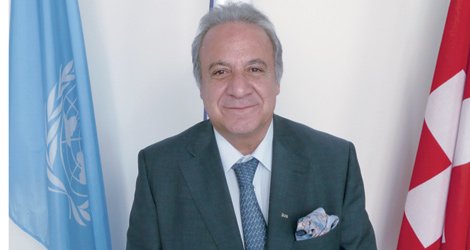
Dr. Ghassan Aidi, a veteran of the hospitality industry with 30 years of experience, has been at the helm of the International Hotel and Restaurant Association since 2006, a position he will hold until 2009. Since 1995, he has served as the Vice President of the Arab Union of Hotels. Under his leadership, Cham Palaces and Hotels, an international hotel management association with branches in Lebanon, Syria, the USA, and Jordan, was the first hotel company to sign the Agreement on the Implementation of the Code of Conduct for the Protection of Children from Exploitation in the Travel and Tourism Industry back in 2003. In addition to various roles he holds in different organizations, such as membership in the Advisory Board of the International Organization for Migration and presiding over Chaine des Rotisseurs in Syria, he has been a member of the United Nations World Tourism Organization (UNWTO) Board for Affiliate Members since 2006. He is a prominent speaker at many industry-relevant conferences, from Damascus, Cairo, London to Beijing and Cartagena in Colombia, discussing a wide range of topics related to sustainability, terrorism, natural disasters, child protection, and migration in the industry. He earned his master’s degree in management and business from the legendary Paris Sorbonne, later adding a doctorate in management information systems in the USA. Aidi briefly reflected on the latest trends and movements in the global hospitality industry and commented on Croatian tourism experiences in this context.
• Can you briefly describe your organization IH&RA, what you do, and your role as its president?
– IH&RA was founded by hoteliers in 1946 in Paris to promote the interests of the private sector on a global scale. Its work is based on protecting the interests of over 200,000 hotels and eight million restaurants worldwide. It has been recognized by the United Nations as a representative of the hospitality industry. Our members include independent hotels, hotel chains, and international hotel associations. Our headquarters moved to Geneva this year. We engage in lobbying and defend the interests of the private hospitality sector worldwide, while also providing consulting services to our members. Currently, we are setting standards for sustainable development and climate change for hotels. As the president of the association, I manage IH&RA, attend all major industry-related meetings around the world, and give lectures and speeches on various topics in areas of interest to us.
• What trends would you identify as the latest in the hotel industry?
– Primarily, defining criteria for sustainable development, a return to luxury hospitality, and within hotel offerings, highlighting the internet and communications as likely relevant trends.
• Is the current financial crisis affecting your industry, and how do the hospitality and hotel industries feel the consequences?
– The hospitality industry is doing well. Moreover, the number of overnight stays and revenues in hospitality are increasing, so it can be stated that our industry has not been affected by the current global economic movements. Hospitality remains very active and profitable, but this applies only to those who have a defined product, maintain quality levels, are clearly market-positioned, offer top-notch service, and have generally quality management.



