
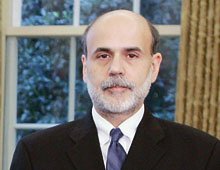
The Chairman of the American Central Bank – the Federal Reserve, Ben Bernanke, proposed on Monday before Congress the adoption of a second tax incentive package to avoid further weakening and long-term slowing of the U.S. economy.
"With the economy likely to be weak for several quarters and with a certain risk of prolonged slowing, it seems appropriate for Congress to consider a package of fiscal measures," Bernanke said before the House Budget Committee. Bernanke, along with Treasury Secretary Henry Paulson, has proposed measures for the U.S. government to combat the financial crisis in recent weeks, including a budget allocation of $700 billion for the bailout of the financial sector.
When asked by committee member Congresswoman Rosa DeLauro whether the U.S. economy is in recession, Bernanke did not answer yes or no, but stated that it is a "serious slowdown." "We are in a serious slowdown," Bernanke said, adding that a recession is technically a description of economic conditions, and "whether we call it a recession or not has no significant consequences." Most of Bernanke’s 90-minute testimony focused on economic incentives. While stating that Congress should consider a new incentive package, he did not specify what funds it should include, emphasizing that it is not up to the Fed to decide.
Earlier this year, the U.S. Congress, at the suggestion of the Bush administration, approved a tax incentive package for citizens and the economy worth about $170 billion. Citizens received a tax rebate of $600 per individual and $1,200 per family, while businesses received other tax reliefs, aimed at stimulating domestic consumption, which accounts for about 70 percent of the U.S. Gross Domestic Product (GDP). Bernanke said on Monday that a possible new incentive program should be activated as soon as possible to stimulate the economy during its period of greatest weakness. He also suggested that Congress consider legislative measures to facilitate access to credit for citizens, homeowners, businesses, and others, including by having the government provide credit guarantees and direct lending to unfreeze the credit market.



