
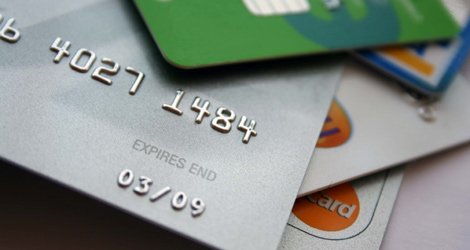
Instead of more cautious lending, banks in a sort of recession are announcing further encouragement for citizens to take on debt through expensive consumer loans. It is no surprise then that new borrowing by citizens in banks is increasing by up to 700 million kuna per month.
Written by: Nikola Prskalo
By using all possible types of cards, Croats managed to fall into the red by as much as 6.4 billion kuna by mid-September this year, marking the largest recorded increase in consumer credit limits within a single calendar year. However, there is no clear answer to how the latest uncertain economic times affect individual consumption habits. What is known is that in the past year, citizens have invested less in durable goods than in previous years, and have spent much more, or rather, they have used various cards purely for consumption. Analysts have calculated that new borrowing by citizens in banks is increasing by up to 700 million kuna per month. Citizens are not doing anything unusual with new credit borrowings. Namely, most are reportedly forced to increase their spending to cover the shortfall in earnings relative to the rising cost of living. This thesis is confirmed by GfK research, which highlights that the number of ‘financially poorer households’ has significantly increased over the past year, with today even a third of the population barely making ends meet.
Encouragement of Borrowing
Analysts admit that paying with credit cards, instead of cash, is becoming increasingly popular here as well, as it gives a false sense that we are not spending real money. Some studies show that people buy much less when paying in cash. Financial experts claim that there are so-called good and bad debts. They remind us that ideally, the monthly repayment of long-term loans, including mortgage loans and credit card debt, should not exceed about 40 percent of total monthly income. According to similar formulas, bankers should determine the creditworthiness of potential clients wishing to take out a loan. However, there are different behaviors emerging lately.
Rules of Saving
By using cards less frequently, one can even save, if some basic rules are followed. The first rule is that withdrawing cash from ATMs using credit cards is something that should definitely be avoided because the amount withdrawn must be repaid on the next bill, but increased by about 10 percent, which is the interest rate. The fact that we do not really adhere to this rule is evidenced by the indicator that Croats visited ATMs a total of 92 million times last year, withdrawing a total of around 60 billion kuna using all types of cards. If you must go to an ATM for cash, try to withdraw a larger amount immediately, rather than, say, 100 or 200 kuna. For example, if you withdraw cash using a Visa Classic or Visa Gold card from Splitska banka (the same applies to other banks) at their ATM, you will be charged 20 kuna for withdrawing 100 kuna, and only 38 kuna for 2,000 kuna. If, however, you find yourself at an ATM of another bank with a card, whether debit or credit, you will be charged 20 kuna for 100 kuna and 40 kuna for 2,000 kuna.
Some banks, in their efforts to earn as much as possible, even in crisis times, or to quickly attract clients, not only disregard the client’s creditworthiness but also increasingly offer new borrowings without significant checks. Such loans, in addition to high interest rates, carry expensive fees that can reach up to three percent of the loan amount as a one-time charge. Instead of smaller and more cautious lending, which would be much more appropriate for the current time of a sort of recession, domestic banks are announcing further encouragement for citizens to take on debt through expensive consumer loans. Card issuers are doing something similar, enticing consumers with various complementary services and attractive discounts to use their cards even more frequently.
Cautious Businesspeople
Not only citizens have fallen into unprecedented debt, but companies have as well. Their deficit has increased from 2.1 billion kuna in December last year to 3.3 billion kuna by mid-September this year. However, if we observe the behavior of businesspeople, recent research shows that Croatian entrepreneurs do not particularly like to overuse their cards. In fact, as many as 62 percent reported having between two and four cards, while only 23 percent have just one card.
To settle bills with a card, 51 percent of businesspeople decide to do so, while 21 percent prefer cash. Even 57 percent of Croatian businesspeople do not use cards for online payments. Only nine percent of respondents said they frequently use their card for online payments, while the others use this service occasionally. Regarding the use of corporate cards – it can be heard that most of our businesspeople use this card cautiously and within the set limits.



