
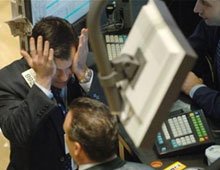
Leading indices on Asian markets sharply fell this morning, with the Nikkei index in Tokyo plunging more than 10 percent at one point, due to a panic withdrawal of investors from the market as they do not believe it is possible to prevent a global recession.
Currently, the Nikkei index on the Tokyo Stock Exchange is down about 8 percent, reaching its lowest levels since May 2003. Since the beginning of the week, it has plummeted more than 20 percent. Stock prices in South Korea have also dropped more than 8 percent.
In Hong Kong, the Hang Seng index fell more than 7 percent, as did the Singapore stock exchange index, after data confirmed that the local economy, one of the strongest in Asia, is already in recession. The MSCI index of Asian stocks, excluding Japan, is down more than 5 percent and is at its lowest levels since June 2005.
This is a consequence of yesterday’s sharp decline in stock prices on Wall Street, despite announcements of new measures by the U.S. Treasury Department to rescue the financial sector, which would even allow for state purchases of stakes in banks. Previous attempts by U.S. financial authorities, from rescuing individual financial giants to injecting billions of dollars into the credit market, to passing a $700 billion bank bailout law, have not calmed investors.
Coordinated interest rate cuts by central banks around the world are seen as actions that came too late to prevent a recession, and investors doubt that the meeting of the leaders of the Group of Seven (G7) richest countries on Friday will result in more effective solutions.
The interbank lending market simply does not respond to the actions of central banks. Fearing hidden losses on balance sheets, banks are unwilling to lend to each other, effectively paralyzing the interbank market, which complicates lending to companies and individuals and increases the cost of money.



